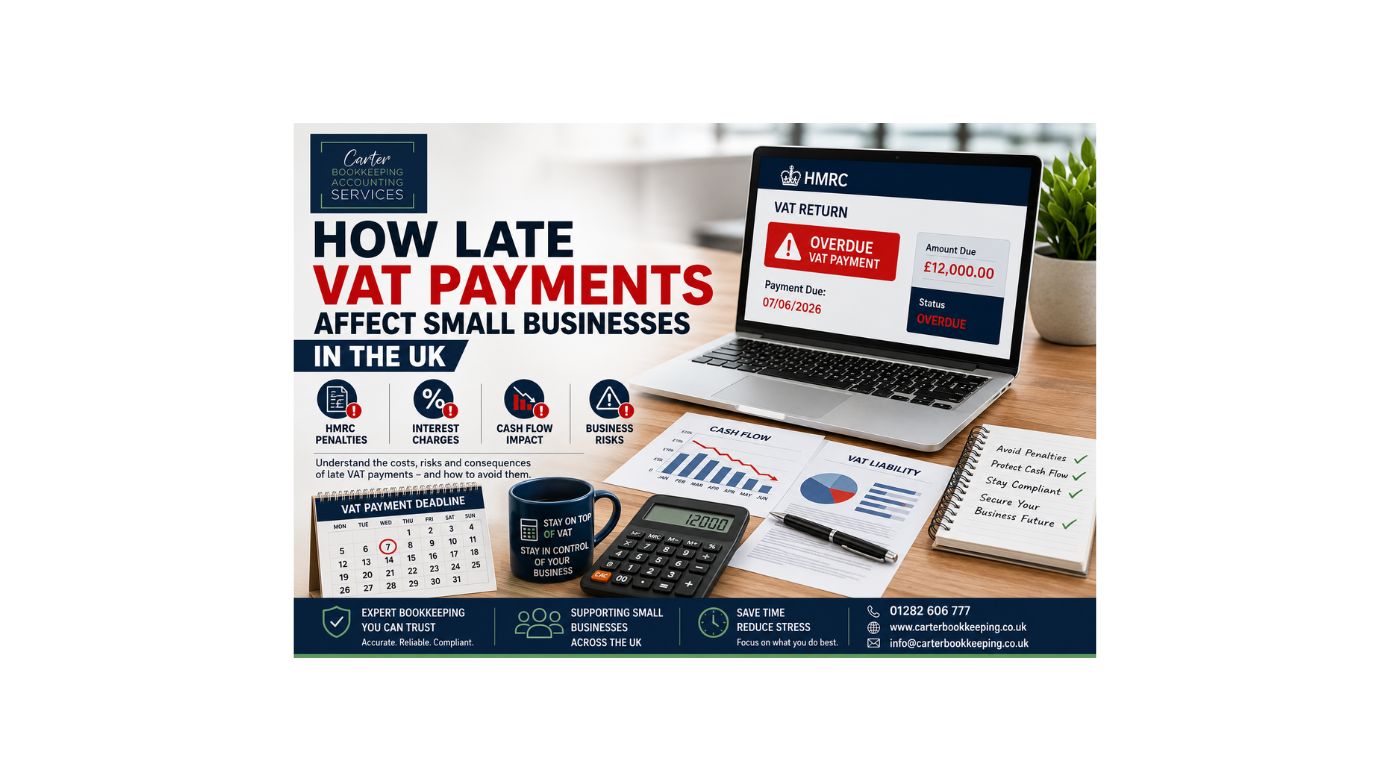
A single late VAT payment can cost a UK small business hundreds, sometimes thousands of pounds in combined penalties and interest. From April 2025, HMRC increased both penalty rates and daily interest, making delayed payments more expensive than ever before.
If you run a VAT-registered small business in the UK, staying on top of your VAT return deadlines is not optional. Miss a payment even by a few weeks and HMRC’s penalty system kicks in fast. And since the rules changed significantly in January 2023, and again in April 2025, many business owners are still operating on outdated assumptions about how much a late payment actually costs.
This guide breaks down every layer of the new VAT penalty regime: what you owe, when you owe it, and critically how to avoid it entirely.
What is the VAT payment deadline for UK small businesses?
Most VAT-registered businesses in the UK file and pay VAT quarterly. Your VAT return and payment are both due one calendar month and seven days after the end of your accounting period.
Important: submitting your VAT return on time but paying late is not a loophole. HMRC treats late payment and late submission as two separate offences, each carrying its own penalty.
How the new VAT late payment penalty system works in 2026
HMRC replaced the old default surcharge system in January 2023 with a more structured and ultimately more punishing penalty regime. Rates increased further in April 2025. Here is exactly how it works.
VAT late payment penalty: day-by-day breakdown
Timeline
Penalty
Days 1 to 15
No penalty. If you pay in full or agree a Time to Pay (TTP) arrangement with HMRC, you escape the penalty entirely.
Days 16 to 30
First penalty: 3% of the VAT still owed. This applies to the outstanding balance at day 15. Interest also begins accruing at 8.5% annually.
Day 31
Second penalty: an additional 3% of the VAT outstanding at day 30, stacked on top of the first penalty.
Day 31 onwards
The second late payment penalty is calculated at a daily rate of 10% per year on the outstanding balance. This is charged every day, from day 31.
Key change from April 2025
HMRC increased:
the first and second penalty from 2% to 3%
daily interest from base rate + 2.5% to base rate + 4%
With the Bank of England base rate at 4.5%, total interest now runs at 8.5% per year, a significant jump from previous years.
Real-world example: what 60 days late actually costs
A small business owes £12,000 in VAT and pays 60 days after the deadline.
Charge type
Cost
First late payment penalty (3% at day 15)
£360
Second late payment penalty (3% at day 30)
£360
Daily rate penalty (10%/yr × 30 days × £12,000)
£98
Interest charges (8.5%/yr × 60 days × £12,000)
£168
Total additional cost
£986
Nearly £1,000 in extra costs for a payment that is only two months late. The longer the delay, the steeper the compounding effect of that daily 10% rate.
The VAT penalty points system for late submissions
Separate from late payment penalties, HMRC also operates a points-based system for late VAT return submissions. This replaced the old immediate surcharge model and is designed to catch repeat offenders while giving first-time mistakes some leniency.
VAT penalty points thresholds
Filing frequency
Penalty threshold
Financial penalty
Reset period
Monthly filers
5 points
£200 per late return
Reset after 6 months on time and all returns filed
Quarterly filers
4 points
£200 per late return
Reset after 12 months on time and all returns filed
Annual filers
2 points
£200 per late return
Reset after 24 months on time and all returns filed
A quarterly filer who misses four consecutive VAT returns will hit the penalty threshold and be charged £200 immediately, and another £200 for every late return after that, until they reset the clock by filing on time consistently.
Points do not expire quickly. For quarterly filers, points only reset after 12 consecutive months of on-time filing plus all outstanding returns being received. Missing one return resets your compliance window and restarts the clock.
Beyond the fines: how late VAT payments damage your business
The financial penalties are just the most visible consequence. Late VAT payments create a cascade of secondary business problems that many owners do not anticipate until they are already in the middle of them.
Cash flow disruption
VAT is collected on behalf of HMRC, it is not your money. When cash flow is tight and the VAT bill arrives, many businesses are tempted to delay paying and use that cash operationally.
This solves a short-term cash problem while creating a larger, compounding liability. The 8.5% interest rate plus penalties will always cost more than most alternative short-term borrowing.
HMRC compliance risk and investigation triggers
Repeated late VAT payments can flag your business for HMRC compliance checks.
This is not hypothetical: HMRC recruited 500 additional compliance staff in April 2025 and plans 600 more debt management staff by April 2026, specifically to close the tax gap and chase outstanding liabilities.
A compliance check consumes time, disrupts operations, and can uncover other issues you would rather not have scrutinised.
Credit and banking implications
Outstanding HMRC debts, including unpaid VAT, can appear in credit searches when you apply for business financing.
Lenders, particularly alternative lenders and invoice finance companies, often request VAT compliance history as part of due diligence. A pattern of late payments can weaken your credit profile and limit access to funding.
Director personal liability
If a limited company becomes insolvent with unpaid VAT, HMRC can in certain circumstances pursue directors personally for unpaid tax debts, particularly if deliberate tax avoidance or negligence is identified. This is rare but worth understanding as a risk when debt accumulates over time.
Stress and management time
Dealing with HMRC correspondence, penalty notices, Time to Pay negotiations, and potential compliance visits takes significant management time away from running the business. These are hours that have a real opportunity cost.
What is a Time to Pay arrangement and should you use one?
If you genuinely cannot pay your VAT bill on time, HMRC does offer a formal mechanism.
Time to Pay (TTP) arrangement
This allows you to spread your VAT liability over a series of agreed instalments. Crucially, agreeing a TTP arrangement within the first 15 days of missing a VAT deadline means you avoid late payment penalties entirely, though interest continues to accrue at 8.5% per year on the outstanding balance.
How to request a Time to Pay arrangement
Call HMRC’s Business Payment Support Service on 0300 200 3835 before or shortly after your deadline.
Have your VAT registration number, the amount owed, and a realistic repayment proposal ready.
Be prepared to explain why you cannot pay in full and show you can meet the proposed instalments.
Submit your VAT return even if you cannot pay. Late submission and late payment are penalised separately.
Pro tip: HMRC responds more favourably to businesses that contact them proactively before the deadline rather than after. Calling ahead demonstrates good faith and significantly improves the likelihood of a favourable TTP arrangement being approved.
7 proven ways to avoid VAT late payment penalties
1. Set up a VAT direct debit with HMRC
Automatically collects payment on the due date, eliminating human error. One of the single most effective steps any VAT-registered business can take.
2. Know your exact deadlines
Mark every VAT quarter-end in your calendar the moment the new tax year begins. Set reminders at 30 days, 14 days, and 7 days before the filing and payment deadline.
3. Set aside VAT as you invoice
Move the VAT portion of every sale into a dedicated VAT holding account immediately. It never touches your operational cash flow, and you are never short when the bill arrives.
4. File your return early, even if you cannot pay yet
Late submission and late payment are separate offences. Filing on time while setting up a TTP protects you from accumulating submission penalty points.
5. Use Making Tax Digital (MTD) compliant software
MTD-compatible accounting software automatically populates VAT returns from your records, reducing errors and ensuring you are working with accurate figures at all times. Using cloud accounting software like Xero can help businesses manage VAT more efficiently and remain compliant.
6. Review your VAT scheme choice
The Flat Rate Scheme, Cash Accounting Scheme, and Annual Accounting Scheme each suit different businesses. Choosing the wrong scheme can create unnecessary cash flow pressure around payment deadlines.
7. Work with a professional bookkeeper
A qualified bookkeeper tracks your VAT position in real time, prepares returns accurately, and flags cash flow gaps before they become penalties. The cost of professional bookkeeping is almost always less than a single set of HMRC late payment charges.
At Carter Bookkeeping Services Limited, we help UK businesses stay compliant, organised, and financially in control.
Can you appeal a VAT penalty?
Yes, and it is worth doing if you have a genuine reason. HMRC will consider appeals where there was a reasonable excuse for the late payment, such as:
serious illness
a death in the immediate family
unforeseen postal or banking failures
a genuine IT failure with HMRC’s own systems
Reasonable excuse does not include:
cash flow difficulties
forgetting the deadline
relying on someone else who forgot
simply not knowing about the deadline
You can appeal online through your HMRC online account or by writing to HMRC within 30 days of the penalty notice. If HMRC rejects your appeal, you can escalate to the First-tier Tax Tribunal.
Frequently asked questions about late VAT payments in the UK
What is the penalty for late VAT payments in the UK?
From April 2025, HMRC charges a 3% penalty on the outstanding VAT balance after 15 days, another 3% after day 30, and a daily rate equivalent to 10% per year from day 31 onwards. HMRC also charges interest at 8.5% per year from the day after the payment was due.
How long can you be late on a VAT payment before HMRC charges a penalty?
HMRC provides a 15-day grace period after the VAT payment due date. If you pay in full or agree a Time to Pay arrangement within 15 days, no late payment penalty applies. However, interest begins accruing from day one.
What happens if I submit my VAT return late but pay on time?
You will receive one penalty point under HMRC’s points-based submission system. Late submission and late payment are treated as separate offences.
What is the VAT return deadline for UK small businesses?
The VAT return deadline is one calendar month and seven days after the end of your VAT accounting period. For quarterly filers, if your VAT quarter ends on 31 March, your deadline is 7 May. Both the return submission and the payment must be completed by this date.
Can HMRC chase a director personally for unpaid VAT?
In limited circumstances, yes. If HMRC can demonstrate that a director deliberately avoided paying VAT or was grossly negligent in a company that later became insolvent, it may pursue a Personal Liability Notice against that director.
What is a Time to Pay arrangement with HMRC for VAT?
A Time to Pay (TTP) arrangement is a formal agreement with HMRC to pay your VAT liability in instalments. If agreed within the first 15 days after the payment deadline, it prevents late payment penalties from applying, though interest continues to accrue.
How do I reset my VAT penalty points?
To reset VAT penalty points, you must submit all VAT returns on time, ensure all outstanding returns have been received by HMRC, and remain compliant for the required compliance period. The compliance period is 12 months for quarterly filers, 6 months for monthly filers, and 24 months for annual filers.
Stop worrying about VAT deadlines. Let us handle it.
Carter Bookkeeping Services Limited manages VAT returns for small businesses across the UK, accurately, on time, every quarter. We work with MTD-compliant software and help businesses stay compliant, avoid penalties, and improve financial visibility.
We also help small businesses across Hertfordshire, Bedfordshire, Buckinghamshire, London, and the wider UK implement management accounting that genuinely makes a difference, not just reports for the sake of reports, but clear financial insights that help you grow with confidence.
Wendy Carter, MAAT, Founder, Carter Bookkeeping Services
Wendy has over 20 years of experience in finance and holds AAT qualifications. She founded Carter Bookkeeping Services Limited to help small businesses in Hertfordshire and across the UK gain clarity, control, and confidence over their finances. Certified in Xero, QuickBooks, and Sage.
We offer a free initial review so you can see exactly what we can do for your business, with no obligation to commit.
If your business is profitable on paper but constantly short of cash, or you are making financial decisions based on instinct rather than reliable data, management accounting could be one of the most valuable changes you make this year.
What Is Management Accounting?
Management accounting is the process of capturing, organising and analysing your business’s financial data so you can understand how the business is performing and what action to take next.
Unlike annual accounts, which primarily report on a completed financial period, management accounting provides current and forward-looking financial information to support day-to-day and strategic decision-making.
For small business owners, sole traders, contractors and limited companies in the UK, management accounting can include:
Monthly management reports: Income, expenditure and performance presented in one clear monthly summary.
Cash flow analysis and forecasting: A clear view of your current cash position and how it may change over the coming weeks or months.
Profit and loss tracking: Insight into where profit is being generated and where margins may be lost.
Budgeting and forecasting: Realistic financial targets measured against actual performance.
Performance and KPI tracking: Regular monitoring of the financial indicators that matter most to your business.
Cash flow is the lifeblood of any business. A company can report healthy profits and still struggle to pay its bills if money is not arriving at the right time.
Management accounting helps you understand your current cash position and identify potential problems early enough to take practical action.
One of the most useful outputs of management accounting is a rolling cash flow forecast. This projects the money expected to enter and leave your business over the coming weeks and months, allowing you to:
Spot a potential cash shortfall before it becomes urgent.
Delay non-essential expenditure during tighter periods.
Plan large purchases, tax payments and VAT bills without unnecessarily disrupting operations.
Approach a bank or lender with accurate financial information if short-term funding is required.
Faster Invoicing and Payment Cycles
Management reports can show how long customers take to pay you, commonly measured as debtor days. Monitoring this figure allows business owners to review credit terms, automate payment reminders and reduce the gap between completing work and receiving payment.
Improving the invoicing and payment process can strengthen day-to-day cash flow without requiring an increase in sales.
Better Control Over Supplier Payments
Management reports also show creditor days, which indicate how quickly suppliers are being paid. Some businesses pay suppliers earlier than necessary, placing avoidable pressure on cash flow, while others pay too late and risk damaging important commercial relationships.
Regular reporting helps you manage supplier payments more effectively while maintaining good relationships and meeting agreed payment terms.
A business can be profitable and still experience serious difficulties if its cash position is not visible early enough to act.
VAT and Tax Planning Without Panic
For VAT-registered businesses, quarterly VAT bills can create pressure if sufficient money has not been set aside. Management accounting allows your estimated VAT liability to be monitored throughout the quarter, rather than only when the return is due.
The same principle can help you plan for Corporation Tax, PAYE and Self Assessment payments on account. Regular reporting gives you time to prepare instead of reacting when a payment deadline is approaching.
How Management Accounting Improves Profitability
Improving cash flow helps keep a business stable. Improving profitability helps it grow. Management accounting supports both by providing the information needed to make better decisions about pricing, costs and strategy.
Profit and Loss Analysis by Service, Product or Client
A standard profit and loss report shows whether the business made a profit overall. Management accounting can go further by analysing profitability across individual products, services, clients, departments or projects.
This helps reveal which parts of the business make a meaningful contribution and which may be quietly reducing overall margins.
Business owners are sometimes surprised to discover that their busiest revenue stream is also one of their least profitable once labour, materials and overheads are allocated accurately.
Identifying and Reducing Unnecessary Costs
Reviewing your figures monthly makes unusual or unnecessary costs easier to identify. Unused subscriptions, supplier price increases, rising utility costs and inefficient processes become visible sooner, giving you an opportunity to act before they have a larger effect on profit.
Pricing Decisions Backed by Data
Underpricing is a common cause of weak profitability. Many small business owners base their prices mainly on what competitors charge rather than the full cost of delivering the work.
Management accounting provides more accurate cost-of-sales information, helping you set prices with greater confidence and review them when the figures justify a change.
Budget Versus Actual Performance
A budget is only useful when actual performance is measured against it. Monthly management reports highlight differences between planned and actual income or expenditure, allowing you to investigate significant variances and adjust course before the end of the financial year.
Why Small Businesses Outsource Management Accounting
Hiring a full-time finance manager can cost between £35,000 and £60,000 per year. For many small businesses, outsourcing management accounting provides access to regular financial reporting and experienced support at a lower cost.
It also removes the recruitment, employment and HR responsibilities involved in building an internal finance function.
Experienced Financial Insight Without the Overhead
You gain access to AAT-qualified support backed by more than 20 years of finance experience without the cost of employing a full-time finance professional. You can find out more about Carter Bookkeeping Services.
Consistent Monthly Reporting
Reports can be prepared on a regular schedule, making financial reviews part of your normal management routine rather than an occasional exercise carried out when a problem appears.
Integrated With Your Accounting Software
Whether you use Xero, QuickBooks, FreeAgent or Sage, outsourced management accounting can be integrated into your existing systems and working practices.
Scalable as Your Business Grows
As your business grows, the level and detail of reporting can develop with it. There is no need to recruit, train or restructure an internal team every time your requirements change.
Management Accounting Versus Bookkeeping
Bookkeeping and management accounting are closely connected, but they perform different roles.
Area
Bookkeeping
Management Accounting
Primary purpose
Records and organises financial transactions accurately.
Analyses financial information to support business decisions.
Main focus
Income, expenditure, invoices, VAT, payroll and reconciliations.
Performance, trends, risks, opportunities, budgets and forecasts.
Time perspective
Primarily records what has already happened.
Uses current and historical data to help plan what happens next.
Business benefit
Creates accurate and organised financial records.
Turns those records into practical financial insight.
Bookkeeping provides the foundation. Management accounting uses that foundation to explain what the figures mean and how they can inform future decisions.
Accurate books are essential for reliable management reports, while management reporting helps business owners get more practical value from their financial records.
At Carter Bookkeeping Services Limited, we provide both services, helping you keep accurate records and understand what your numbers are telling you.
Who Needs Management Accounting?
Management accounting is not reserved for large organisations. Small and medium-sized businesses can benefit significantly because they often have less margin for error and fewer internal resources dedicated to financial monitoring.
Management accounting can be particularly useful for:
Sole traders and freelancers who want to grow but lack clear financial visibility.
Limited companies that need clearer monthly reporting for directors.
Contractors and consultants managing irregular income.
Trades businesses, including builders, electricians and plumbers, where profitability can vary significantly between jobs.
Property and letting businesses tracking rental income and maintenance costs.
Growing businesses preparing to apply for finance or raise investment.
Business owners preparing for an eventual sale or exit who need clear and credible financial records.
These are some of the questions we hear most often from small business owners across Hertfordshire, Bedfordshire and the rest of the UK.
What Does Management Accounting Include for a Small Business?
For a small business, management accounting can include monthly profit and loss reports, cash flow analysis and forecasting, budget-versus-actual comparisons, KPI monitoring and profitability analysis by product, service, client or project.
At Carter Bookkeeping Services Limited, the reporting is tailored to the size of your business and the decisions you need to make, whether you require a simple monthly summary or a more detailed breakdown.
How Does Management Accounting Improve Cash Flow?
Management accounting improves cash flow visibility by showing your expected cash position over the coming weeks and months. This helps you plan around significant outgoings, follow up unpaid invoices, manage supplier payments and delay non-essential expenditure before a shortfall becomes urgent.
Can Management Accounting Increase My Profits?
Management accounting can support improved profitability by showing which services, products or clients generate the strongest margins, highlighting unnecessary expenditure and providing better information for pricing decisions.
The results depend on the quality of the information and how effectively the business acts on the findings.
How Much Does Outsourced Management Accounting Cost in the UK?
The cost depends on the size and complexity of your business, the quality of your existing records and the level of reporting required.
Carter Bookkeeping Services Limited offers transparent, fixed-price packages based on the work involved. Contact us for a tailored quotation.
How Is Management Accounting Different From Annual Accounts?
For limited companies, statutory annual accounts are prepared for Companies House and HMRC and report on a completed financial period.
Management accounts are prepared for internal use, usually monthly or quarterly. They are more detailed, can include forecasts and are designed to help owners and directors manage the business rather than simply meet reporting obligations.
Do You Work With Xero, QuickBooks, FreeAgent and Sage?
Yes. Carter Bookkeeping Services Limited works with businesses using Xero, QuickBooks, FreeAgent and Sage. Reports can be produced from your existing accounting system, or a more suitable reporting structure can be introduced if required.
Do I Need Both Bookkeeping and Management Accounting?
They work best together. Bookkeeping creates the accurate records that management accounting analyses. Without accurate books, management reports may be unreliable. Without management reporting, business owners may not be using their financial data to its full potential.
Carter Bookkeeping Services Limited can provide both services as part of an integrated package.
Gain Greater Clarity Over Your Finances
Management accounting is not a luxury reserved for large businesses. It is a practical way for small business owners to understand cash flow, monitor profitability and make decisions using reliable information rather than guesswork.
With clearer financial visibility, a business can become more resilient, predictable and easier to manage.
At Carter Bookkeeping Services Limited, we help small businesses across Hertfordshire, Bedfordshire, Buckinghamshire, London and the wider UK implement management reporting that supports real decisions.
If you are ready to stop flying blind with your finances, get in touch for a free financial review.
About Wendy Carter, MAAT
Wendy Carter has more than 20 years of experience in finance and holds AAT qualifications. She founded Carter Bookkeeping Services to help small businesses in Hertfordshire and across the UK gain greater clarity, control and confidence over their finances.
Wendy works with businesses using Xero, QuickBooks, FreeAgent and Sage.
Contact Carter Bookkeeping Services
We offer a free initial review so you can understand how our services could support your business, with no obligation to proceed.
If you run a homebuilding or construction business in the UK, the Construction Industry Scheme (CIS) is one of the most demanding parts of your monthly compliance routine. Whether you are deducting tax from subcontractors and filing returns to HMRC, or operating as a subcontractor and having money withheld from your own payments, CIS touches your business every single month.
In April 2026, the scheme changed in ways that have materially increased the compliance burden. Mandatory nil returns are now a legal requirement, a reinstated full penalty regime means late filing carries real financial consequences, and new anti-fraud powers mean contractors can be held liable for issues in their supply chain even without direct involvement. Add to that the rollout of Making Tax Digital for Income Tax, and the picture for homebuilders is more complex than it has been in years.
Professional bookkeeping is what holds all of this together. At Carter Bookkeeping Services Limited, based in Harpenden and working with clients across Hertfordshire, Bedfordshire, and London, we manage CIS on behalf of construction businesses so they can concentrate on the work that generates revenue rather than the paperwork that protects them from penalties.
What is the Construction Industry Scheme?
The Construction Industry Scheme is an HMRC mechanism that governs how tax is collected from workers in the UK construction sector. Rather than leaving each self-employed subcontractor to pay their own tax through a year-end return, CIS places the deduction obligation directly on the contractor making the payment. Tax is taken at source before the subcontractor receives their money, and the contractor pays that withheld amount to HMRC on the subcontractor’s behalf.
If you pay another person or business to carry out construction work, whether that is a sole-trader plasterer, a groundworks firm, or a roofing company, you are a CIS contractor in HMRC’s eyes, regardless of how occasionally you do so. Those you pay for that work are your subcontractors. The scheme applies to companies, partnerships, and sole traders equally, and there is no minimum payment threshold below which you are exempt.
The scope of qualifying construction work is broad. It covers new-build residential and commercial properties, extensions, conversions, loft and basement works, groundworks, foundations, drainage, civil engineering, electrical and plumbing installations, heating and ventilation, plastering, roofing, tiling, interior fit-out, site preparation, scaffold erection where labour is involved, and demolition. It also covers repairs and alterations to existing buildings. If you are building homes, whether single dwellings or larger developments, CIS almost certainly applies to a significant portion of what you pay out each month.
It is worth noting that the scheme covers all construction work carried out anywhere in the UK, including London and the South East, and also extends into UK territorial waters up to the twelve-mile limit. There is no regional variation in the rules or rates.
How CIS deductions work for homebuilders
Before you make a payment to a subcontractor, you are required to verify their CIS status with HMRC through the Government Gateway online service. HMRC will confirm the rate of deduction you must apply or tell you that the subcontractor can be paid without any deduction at all. You do not need to re-verify a subcontractor you have already included on a return in the current or previous two tax years; you simply pay on the same basis as the last payment made.
The deduction rate depends entirely on the subcontractor’s verified status. A subcontractor who holds gross payment status receives their full payment with no deduction; they are responsible for accounting for their own tax. A subcontractor who is registered with CIS has 20% deducted from the qualifying part of their payment. A subcontractor who is not registered with CIS, or who cannot be verified, is subject to the higher rate of 30%. That difference is significant: a subcontractor invoicing £5,000 for labour receives £4,000 if registered and only £3,500 if not. Encouraging your subcontractors to register is genuinely in everyone’s interest.
The deduction only ever applies to the labour element of an invoice, not to the cost of materials. If a subcontractor invoices you for both labour and materials, you must split the invoice correctly before calculating the deduction. Applying the CIS rate to the entire invoice total including materials is one of the most common and costly errors homebuilders make. It results in over-deduction, which creates disputes with subcontractors and refund obligations. HMRC can also challenge a materials split that appears artificially inflated relative to the scope of work and can hold you liable for any tax that should have been deducted from the labour element but was not.
The amounts you withhold from subcontractors must be paid to HMRC by the 22nd of the following month when paying electronically, or the 19th if paying by cheque. At the same time, you must submit your CIS300 monthly return to HMRC by the 19th, setting out all payments made to subcontractors during the tax month and the deductions applied. You must also issue a written deduction statement to each subcontractor within fourteen days of the end of the tax month, showing the gross payment, the amount subject to deduction, and the deduction itself.
Subcontractor status
Deduction rate (2026/27)
How it works
Gross payment status
0%
Paid in full. Subcontractors account for their own tax via Self Assessment or MTD.
Registered with CIS
20% on labour
Contractor deducts 20% from the labour element and pays it to HMRC.
Unregistered or unverified
30% on labour
Higher rate applies. Subcontractors receive only 70% of their labour payment.
What changed in April 2026 and why it matters
The Autumn Budget 2025 announced a package of CIS reforms aimed at tackling fraud, reducing administrative confusion, and tightening compliance across the construction sector. All three sets of changes came into force on 6 April 2026, marking the most significant overhaul of the scheme in over a decade. If you have not already reviewed your CIS processes considering these changes, there is a real risk that something in your current routine is now non-compliant.
Mandatory nil returns
Before April 2026, contractors who made no subcontractor payments in a particular month could notify HMRC informally or do nothing at all. In practice, many contractors simply let quiet months pass without any action, which led to automated penalty notices being issued even where no payments had been made and a significant volume of appeals clogging up both HMRC and businesses alike. To resolve this, HMRC suspended most late-filing penalties above the initial £100 fixed penalty from 2015 onwards, which created its own problems: contractors lost the discipline of monthly filing, and HMRC lost visibility over the scheme.
From 6 April 2026, all CIS contractors must file a CIS300 monthly return in every single tax month, including months where no subcontractor payments were made. The only exception is where you have submitted an inactivity notification to HMRC in advance, which exempts you from filing for up to six months. To trigger this, you tick the inactivity box on your most recent CIS return. Once the six months are up, the obligation resumes automatically. A bookkeeper managing this on your behalf will ensure the right notification goes in at the right time, so you are never accidentally exposed to a nil-return penalty.
Anti-fraud measures
These are the most far-reaching changes in the April 2026 package, and the ones that carry the greatest risk for homebuilders who do not take them seriously. From 6 April 2026, HMRC has powers to act against any contractor who made a payment or claimed a CIS deduction that they knew, or using an objective test, should have known was connected to deliberate non-compliance by another party in their supply chain. Critically, HMRC does not need to prove you had actual knowledge of the fraud. The test is whether a reasonable business in your position ought to have recognised the risk.
Where HMRC determines that the condition is met, it can assess you for a CIS charge equal to 20% of the payment made, or the full value of an incorrect CIS credit claim. It can apply penalties of up to 30% of the lost tax to the business and to its officers or directors personally. It can also cancel gross payment status with immediate effect, and the business is then barred from reapplying for five years, up from one year under the previous rules. The removal of GPS has serious cash flow consequences: from the date of cancellation, contractors can have 20% withheld from every payment they receive, even on high-value contracts.
HMRC has indicated it will look for warning signs including excessively long supply chains where labour costs appear implausibly low, pricing that only makes commercial sense if tax is not being paid, high-value contracts with no formal written agreements, and directors who have no evident construction experience. The practical implication for homebuilders is that you need documented evidence of the due diligence you carry out when engaging subcontractors, not just a verbal check. Your bookkeeper can help you build and maintain that paper trail.
Public body exemption
From 6 April 2026, payments made to local authorities and certain public sector bodies, including housing associations in certain circumstances, are fully outside the scope of CIS under new Regulation 24ZA. Previously, these bodies relied on an Extra Statutory Concession to be treated as having gross payment status. The new regulation removes the need for that workaround and means that contractors making payments to qualifying public bodies simply do not deduct or report those payments under CIS at all. For homebuilders with contracts that involve public sector subcontractors, this removes a compliance layer that was always administratively awkward.
Reinstatement of the full penalty regime
Alongside the nil return obligation, HMRC has reinstated the full escalating CIS late-filing penalty regime that it effectively suspended in 2015. A return filed one day late now attracts a £100 penalty. Where the return remains outstanding two months after the deadline, a further £200 penalty applies. At six months, a tax-geared penalty of £300 or 5% of any CIS liability shown on the return is charged, whichever is higher. A further equivalent charge applies at twelve months, with the exact amount depending on HMRC’s view of why the return was delayed. Deliberate withholding of information can result in penalties up to 100% of the deductions. These penalties apply per return, which means a contractor who falls significantly behind can accumulate several thousand pounds in fines before any tax-geared charges even come into play.
The bookkeeping challenges of CIS for homebuilders
Managing CIS has never been straightforward, and the 2026 changes have added new layers of obligation on top of an already demanding monthly routine. Understanding where the common failures happen is the first step to avoiding them.
The most fundamental error is failing to verify subcontractors with HMRC before making the first payment. Verification must happen before any money changes hands, not retrospectively. If you apply the wrong rate because you have skipped this step, you may underpay HMRC (creating a liability that sits with you as the contractor) or over-deduct from the subcontractor (causing a dispute and potentially a refund obligation). The verification reference number must also be retained in your records, as it serves as evidence of due diligence under the post-April 2026 anti-fraud provisions.
Applying the CIS deduction to the full invoice value including materials is another persistent source of errors. Every subcontractor invoice that combines labour and materials costs must be properly split before the deduction is calculated. This sounds straightforward in principle but becomes more complex when invoices are poorly structured or when a subcontractor lists materials and labour as a single line. A bookkeeper who knows what HMRC expects will interrogate every invoice correctly and keep a clear record of how each split was arrived at.
Missing the monthly return deadline is a risk that grows with the size and complexity of a homebuilder’s subcontractor base. With multiple trades invoicing at different times, project deadlines competing for attention, and the 19th arriving with little notice, it is easy for the filing obligation to slip. From April 2026, this includes months where you have made no payments at all. A bookkeeper treats the 19th as a hard deadline every month, regardless of project pressures.
The requirement to issue written deduction statements to subcontractors within fourteen days of the end of each tax month is a compliance obligation that many homebuilders overlook or handle inconsistently. Failing to issue these statements or issuing them late or with errors is a separate breach that carries its own penalty exposure of up to £3,000 per period. Subcontractors also need their statements promptly to complete their own tax returns, so any failure here creates friction in the working relationship.
Finally, homebuilders who also operate as subcontractors, which is common in residential construction, frequently fail to recover the full value of CIS deductions suffered throughout the year. These deductions are advance payments of tax and recovering them requires accurate records of every deduction taken from every payment received. Without that, the year-end reclaim is based on incomplete information, and the business ends up overpaying tax that it is entitled to recover.
How professional bookkeeping solves CIS problems
A professional bookkeeper who works regularly with construction businesses brings a structured, process-driven approach to CIS that eliminates the gaps and errors that tend to accumulate when business owners try to manage it themselves alongside everything else.
The starting point is a properly maintained subcontractor register. Before any payment is made, the subcontractor is verified with HMRC, the result is recorded alongside the verification reference number, and the correct deduction rate is applied from that point forward. This register is kept current, re-verification is carried out where needed, and it doubles as the primary documentary evidence of due diligence that the new anti-fraud provisions require. If HMRC were ever to question whether you should have known about a compliance issue in your supply chain, a well-maintained verification record is your most important line of defence.
Every subcontractor invoice that passes through the bookkeeping process is reviewed and correctly split between labour and materials before the deduction is calculated. This is not just good practice, it is a legal requirement, and HMRC has the power to review those splits during a compliance check and to hold the contractor liable where the materials element appears artificially high. A bookkeeper with construction sector experience knows what a credible split looks like for different types of work and will flag anything that needs clarification before a payment is processed.
Monthly CIS300 returns are prepared and filed on time every month without exception, including nil returns in months where no subcontractor payments have been made. The 19th of the month is a fixed point in the bookkeeping calendar. Written deduction statements are produced for every subcontractor within the required fourteen-day window, ensuring compliance and maintaining good working relationships with the trades your business relies on.
Where a homebuilder also operates as a subcontractor, the bookkeeper tracks every CIS deduction taken from incoming payments throughout the year. At year-end, a full reconciliation is carried out to ensure the complete value of deductions suffered is claimed against the tax liability, and where deductions exceed the liability, the refund claim is prepared and submitted with supporting documentation. For many construction businesses, this reclaim represents a material cash inflow that proper bookkeeping makes possible.
Beyond the monthly cycle, a bookkeeper managing your CIS can also help you respond efficiently and accurately to any HMRC compliance review. A clear, complete audit trail, verified subcontractors, correct deductions, timely returns, properly issued statements, is the most effective way to bring a compliance enquiry to a swift and clean conclusion.
Protecting your cash flow with CIS bookkeeping
Cash flow is the defining challenge of homebuilding. Long project cycles, staged payments, and the gap between costs incurred and revenue received create a permanent pressure on working capital. CIS adds a dimension to this that is easy to underestimate, particularly for businesses that act as both contractors and subcontractors at different stages of the same supply chain.
When you operate as a subcontractor, perhaps as a smaller homebuilder working under a larger main contractor, CIS deductions are taken from every payment you receive. At 20%, that means you receive 80p for every pound of labour invoiced. Over the course of a year, the withheld amounts can represent a very significant portion of the business’s revenue, all of it sitting with HMRC rather than in your bank account. That money is not lost; it comes back as a reduction in your tax bill at year-end, or as a refund if deductions exceed your liability, but only if your bookkeeping records are accurate enough to support a complete claim. Many homebuilders recover far less than they are entitled to simply because the underlying records are incomplete.
“For many of our construction clients, the CIS reclaim at year-end is one of the most significant cash injections their business receives across the whole year. The only thing that makes it possible, and maximises it, is accurate bookkeeping throughout the twelve months.”
Wendy Carter, Carter Bookkeeping Services Limited
On the contractor side, the picture is different but equally important. When you pay subcontractors, the CIS deductions you withhold represent a liability to HMRC that must be met by the 22nd of the following month. If your bookkeeping does not accurately track these liabilities in real time, you can find yourself facing a payment obligation you have not planned for. Good bookkeeping means you always know your exact CIS liability position before the deadline arrives, no surprises, no shortfalls, no interest charges for late payment.
There is also a project-level benefit. Knowing the true cost of labour on each project, net of CIS implications, is essential for accurate margin analysis. If CIS is being managed ad hoc rather than systematically, the cost data that flows into your project accounts will be unreliable, and decisions about pricing and profitability will be made on a distorted picture. A bookkeeper who integrates CIS management with your wider financial records gives you numbers you can rely on.
The 2026 CIS penalty regime and what homebuilders now face
The reinstatement of the full escalating CIS penalty regime from April 2026 is something every homebuilder operating under the scheme needs to understand clearly. For over a decade, the effective enforcement was limited to the initial £100 fixed penalty because of the issues created by the absence of a nil return obligation. That period of relatively low enforcement risk is over.
Situation
Penalty
Return filed 1 day late
£100 per return
Return still outstanding at 2 months
Additional £200 per return
Return outstanding at 6 months
£300 or 5% of CIS liability shown, whichever is higher
Return outstanding at 12 months
Further £300 or 5%, amount varies depending on reason for delay
Incomplete or negligent return
Up to £3,000 per return
Failure to produce records when requested
Up to £3,000
Failure to issue deduction statements to subcontractors
Up to £3,000
Anti-fraud breach (knew or should have known)
20% of payment made or 100% of incorrect CIS credit claimed, plus up to 30% penalty on lost tax, plus immediate GPS cancellation and 5-year reapplication ban
These penalties apply per return, which means that a contractor who falls several months behind can accumulate thousands of pounds in fixed penalties before any liability-based charges are even considered. A homebuilder who misses twelve months of nil returns, perhaps having been unaware of the new April 2026 obligation, faces over £1,200 in fixed penalties at a minimum before any other charges apply. The anti-fraud penalties are in a different category entirely: the combination of a 20% charge on the payment, a 30% penalty on lost tax, and GPS cancellation with a five-year bar can be devastating for a business that relies on smooth cash flow from main contractor work.
The straightforward route to avoiding all of this is consistent, accurate monthly bookkeeping with CIS at its centre. The cost of professional bookkeeping support is not comparable to the penalty exposure; it is a fraction of it, and it eliminates the risk entirely.
Making Tax Digital and CIS: what homebuilders must know in 2026
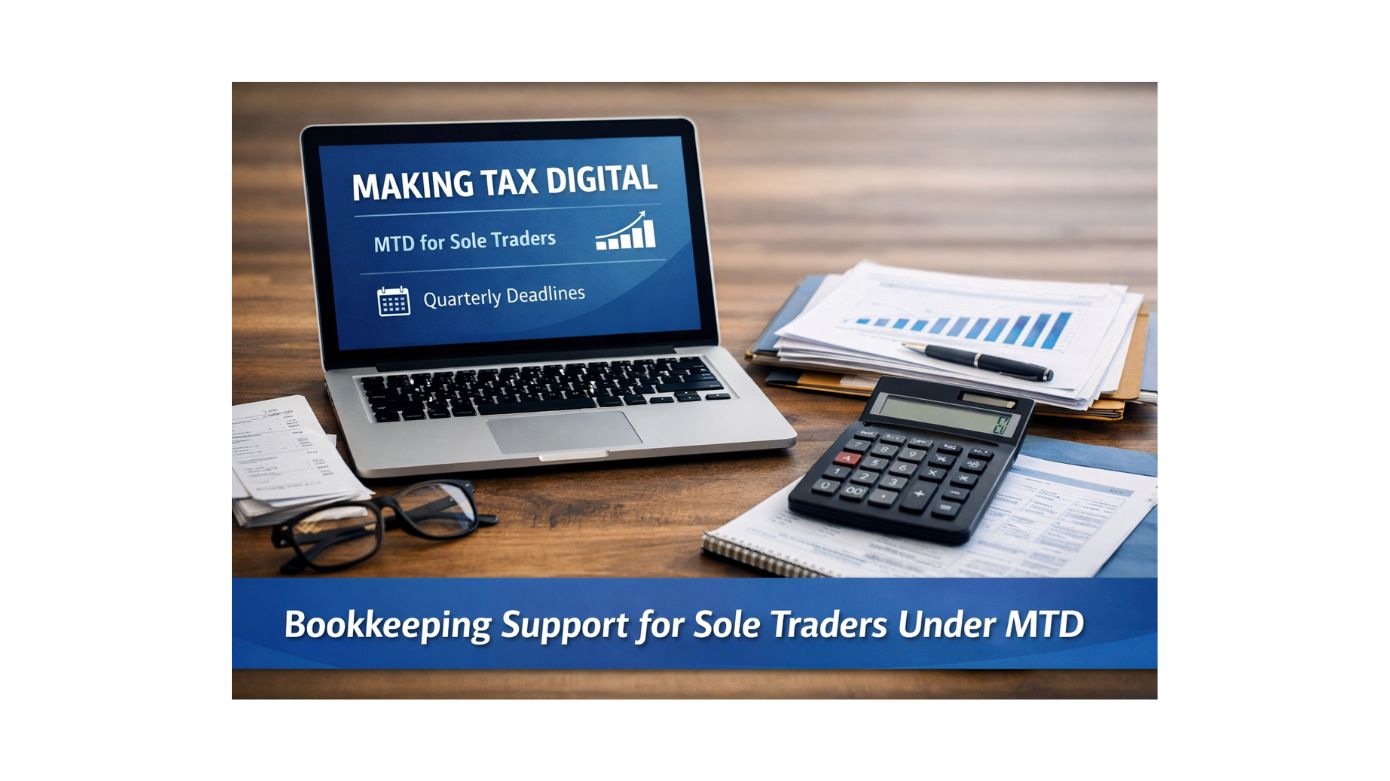
Making Tax Digital for Income Tax, or MTD ITSA, represents the biggest change to how self-employed individuals report income to HMRC in a generation. It is now live for the first wave of affected taxpayers, and it intersects directly with CIS for construction sole traders and partnerships.
From 6 April 2026, any sole trader or landlord whose qualifying income, meaning combined income from self-employment and property, exceeded £50,000 in the 2024/25 tax year must use HMRC-compatible digital software to keep their records and submit quarterly updates to HMRC. The traditional annual Self-Assessment tax return is replaced by four quarterly submissions during the year and an end-of-year declaration that finalises the tax position. A second wave of taxpayers, those with qualifying income between £30,000 and £50,000 in 2025/26, will join the MTD regime from 6 April 2027.
For construction sole traders operating as subcontractors under CIS, this change has direct practical implications. CIS deductions suffered throughout the year, which were previously reported in the Self-Assessment return and offset against the final tax bill, will now flow through the MTD-compatible software into the end-of-year declaration. If the software is not correctly configured to track CIS deductions as they occur and carry them through to the end-of-year calculation, the offset will be missed, the declared tax liability will be overstated, and the business will overpay tax. Getting the software setup right from the outset is critical, and it is something a bookkeeper with MTD experience handles as part of the transition process.
It is also worth noting that the quarterly updates required under MTD ITSA are not a replacement for the monthly CIS return obligation, which continues in parallel. A construction sole trader in scope for MTD must therefore maintain both a monthly CIS filing routine for their contractor obligations and a quarterly MTD update process for their own income tax reporting. Managing these two overlapping compliance rhythms is considerably more straightforward when a single bookkeeper oversees the whole picture.
Xero for CIS compliance in 2026
Xero is an HMRC-recognised, MTD-compatible platform with built-in CIS functionality, and is in regular use at Carter Bookkeeping Services Limited for construction and homebuilding clients.
Xero’s CIS module allows contractors to verify subcontractors and record their status directly through the platform, automatically apply the correct deduction to the labour element of each invoice, generate CIS300 returns for direct submission to HMRC via the Government Gateway, and produce compliant deduction statements for subcontractors. For sole traders in scope for MTD ITSA from April 2026, Xero is fully compatible and handles both the monthly CIS return and the quarterly MTD updates within the same system. For homebuilders who value a clean, accessible interface and straightforward bank reconciliation, Xero is typically the stronger fit.
Frequently asked questions
What are CIS deductions and who do they apply to?
CIS deductions are amounts a contractor must withhold from payments made to subcontractors for qualifying construction work in the UK. The scheme applies to any business, sole trader, partnership, or limited company, that pays subcontractors for construction operations. The standard rate in 2026/27 is 20% for registered subcontractors and 30% for those not registered or verified. The deduction applies only to the labour element of the invoice, not to materials or direct expenses. The amounts withheld are paid to HMRC as advance payments of the subcontractor’s Income Tax and National Insurance.
Do homebuilders have to file a nil CIS return if they made no payments that month?
Yes, this is now a legal requirement from 6 April 2026. All CIS contractors must file a CIS300 monthly return in every tax month, including months where no payments to subcontractors were made. The only exception is where an inactivity notification has been submitted to HMRC in advance, which pauses the obligation for up to six months. A business that simply does nothing in a quiet month will now incur a late-filing penalty starting at £100 per return under the reinstated full penalty regime.
What are the new anti-fraud rules and what risk do they create for homebuilders?
From 6 April 2026, HMRC can pursue contractors who knew, or using an objective standard should have known, that a payment they made was connected to deliberate CIS or PAYE non-compliance in their supply chain. Direct involvement in the fraud is not required. When the test is met, HMRC can charge 20% of the payment, apply penalties up to 30% of lost tax to the business and its directors, and immediately cancel gross payment status with a five-year bar on reapplication. Maintaining a documented subcontractor due diligence process, including verified status records and flagging of suspicious invoice patterns, is the most effective protection.
Can a homebuilder reclaim CIS deductions that have been taken from their own payments?
Yes. CIS deductions taken from payments you receive as a subcontractor are treated as advance payments of tax. Limited companies offset them against their Corporation Tax liability; sole traders and partnerships offset them against Income Tax. Where deductions exceed the liability, HMRC will issue a cash refund. Accurate bookkeeping records showing every deduction received throughout the year are essential to claim the full amount. From the 2026/27 tax year, sole traders with qualifying income over £50,000 will claim CIS deductions through their Making Tax Digital end-of-year declaration rather than through Self-Assessment.
What is the CIS monthly return deadline?
The CIS300 monthly return must be filed with HMRC by the 19th of the month following the end of the tax month in which payments were made, or the 19th of any month in which no payments were made and no inactivity notification is in place. The withheld CIS amounts must be paid to HMRC by the 22nd of that same month when paying electronically. For example, subcontractor payments made in the tax month ending 5 May must be reported by 19 May and paid by 22 May.
Does CIS apply to construction work in London?
Yes. The Construction Industry Scheme applies uniformly to all qualifying construction work carried out anywhere in the UK, including London and the Greater London area. There is no regional variation in rates, registration requirements, or filing obligations. Carter Bookkeeping Services works with homebuilders and construction contractors across Hertfordshire, Bedfordshire, and Greater London, providing CIS bookkeeping and MTD support remotely via Xero and Sage.
What is gross payment status and why does it matter?
Gross payment status (GPS) allows a subcontractor to receive their full payment with no CIS deduction, meaning they receive 100% of their labour invoice rather than 80%. HMRC grants GPS to subcontractors who pass turnover, compliance, and business tests. From April 2026, HMRC can cancel GPS immediately where anti-fraud provisions are triggered, and the business cannot reapply for five years. Subcontractors with GPS must still be included on the contractor’s monthly CIS return, but with a nil deduction recorded. Maintaining a clean compliance record is essential both to obtain and to retain gross payment status.
How does Making Tax Digital affect CIS in 2026?
MTD for Income Tax is now mandatory from 6 April 2026 for sole traders and landlords with qualifying income over £50,000. For construction sole traders who receive CIS-deducted payments, this replaces Self Assessment with quarterly digital submissions and an end-of-year declaration through HMRC-compatible software such as Xero or Sage. CIS deductions suffered throughout the year are claimed through this process. It is separate from and runs in parallel to the monthly CIS return obligation. Those with qualifying income between £30,000 and £50,000 join the MTD regime from April 2027.
Next steps: get expert CIS bookkeeping support
The April 2026 changes have made CIS compliance more demanding than it has been at any point in recent years. Nil returns are mandatory, the full penalty regime is back in force, anti-fraud powers now extend to supply chain liability, and Making Tax Digital is live for a significant portion of construction sole traders. Taken together, these changes mean that operating CIS on an ad hoc basis, managing it yourself alongside everything else your business demands, carries greater risk than it ever has before.
At Carter Bookkeeping Services Limited, based in Harpenden, Hertfordshire, we work with homebuilders, construction contractors, and sole traders across Hertfordshire, Bedfordshire, and Greater London. We are members of the Association of Accounting Technicians (AAT), certified on Xero and Sage, and experienced in the practical realities of CIS compliance for businesses of all sizes. We handle the full CIS cycle on your behalf: subcontractor verification, monthly CIS300 filing including nil returns, deduction statement production, supply chain due diligence records, year-end reclaim reconciliation, and MTD ITSA setup and ongoing management. Our service is personalised, fairly priced, and delivered with the responsiveness that genuinely makes a difference when deadlines are involved.
If you want to take CIS off your plate, book a free no-obligation consultation. We will review your current setup against the new 2026 rules, identify any compliance gaps, and explain exactly how we can help, straightforwardly and without jargon.
We offer a free initial review so you can see exactly what we can do for your business, with no obligation to commit.
If you are a contractor, whether you are a plumber, electrician, IT consultant, builder or another type of self-employed professional, you already know that running your own business means wearing several hats.
You quote for work, manage clients, buy materials, schedule jobs and complete the work itself. You also need to find time to issue invoices, record expenses, meet tax deadlines and keep your financial records in order.
In 2026, the financial administration facing UK contractors has become more demanding. Making Tax Digital for Income Tax is now mandatory for some sole traders, while the Construction Industry Scheme, VAT reporting and wider digital record-keeping requirements continue to create additional responsibilities.
For many contractors, professional bookkeeping services are no longer simply a convenient way to save time. They are an important part of keeping the business organised, compliant and financially under control.
This guide explains what contractor bookkeeping involves, the main reporting obligations contractors face and how professional bookkeeping support can help you save time, reduce mistakes and understand your finances more clearly.
What Is Contractor Bookkeeping?
Bookkeeping is the process of recording, organising and maintaining the financial transactions of a business. Contractor bookkeeping follows the same basic principles as general small business bookkeeping, but it often involves additional complexities.
Contractors may receive irregular income, work across several clients or sites and incur substantial costs for materials, tools, travel and subcontracted labour. Some operate under the Construction Industry Scheme, while others are VAT registered or affected by Making Tax Digital for Income Tax.
The appropriate bookkeeping process also depends on whether you operate as a sole trader, limited company or partnership. Each structure has different reporting, tax and record-keeping requirements.
A contractor bookkeeper understands these differences and maintains records in a format that supports your tax returns, management decisions, accountant and HMRC reporting obligations.
The core bookkeeping tasks undertaken for contractors can include:
Recording business income and expenditure accurately and consistently.
Reconciling bank accounts, credit cards and payment platforms.
Recording CIS deductions and verifying subcontractors where required.
Preparing accurate records for Self Assessment or Corporation Tax.
Producing profit and loss reports and cash flow information.
Liaising with your accountant before the end of the financial year.
Setting up and maintaining accounting software such as Xero, FreeAgent, QuickBooks or Sage.
Making Tax Digital for Contractors in 2026
One of the most important changes affecting contractor bookkeeping in 2026 is Making Tax Digital for Income Tax.
From 6 April 2026, contractors operating as sole traders must use Making Tax Digital for Income Tax if their qualifying income from self-employment and property exceeded £50,000 in the 2024/25 tax year.
The threshold will reduce to £30,000 from 6 April 2027 and £20,000 from 6 April 2028.
Contractors who fall within the rules must:
Create and maintain digital records of their business income and expenditure.
Use software that works with Making Tax Digital for Income Tax.
Send quarterly summaries of income and expenditure to HMRC.
Review and adjust their figures after the end of the tax year.
Submit their annual tax return through compatible software.
The quarterly updates are summaries rather than complete tax returns. They do not replace the requirement to submit an annual tax return by the applicable deadline.
For most people who entered MTD for Income Tax on 6 April 2026, the first quarterly update covers the period from 6 April to 5 July 2026 and must be submitted by 7 August 2026.
The normal 2025/26 Self Assessment return must still be submitted by 31 January 2027. The first annual tax return completed through MTD software will cover the 2026/27 tax year and will be due by 31 January 2028.
This creates a much greater need for accurate, up-to-date bookkeeping throughout the year. Waiting until January to organise a collection of receipts and spreadsheets is no longer a practical approach for contractors within MTD.
At Carter Bookkeeping Services Limited, we help contractors set up suitable software, maintain digital records and prepare the information required for quarterly updates and annual reporting.
The Construction Industry Scheme
If you work as a contractor or subcontractor within construction, you may fall within the Construction Industry Scheme, commonly known as CIS.
CIS applies to construction work and certain related activities. This can include building work, demolition, repairs, decorating and site preparation, although the exact scope depends on the work being undertaken.
Under CIS:
Contractors must register where required, verify subcontractors, calculate the appropriate deductions and report payments to HMRC.
Registered subcontractors will normally have deductions made at 20% unless they have gross payment status.
Unregistered or unverified subcontractors may have deductions made at 30%.
Subcontractors with gross payment status can be paid without CIS deductions, although they remain responsible for their tax liabilities.
Contractors must normally verify a new subcontractor before paying them. They must also provide payment and deduction statements and submit monthly CIS returns to HMRC.
CIS returns are generally due by the 19th of each month for the previous CIS tax month. From April 2026, contractors must also account for months in which no subcontractors were paid unless HMRC has agreed an appropriate period of inactivity.
CIS bookkeeping must distinguish between gross payments, allowable material costs, deductions withheld and the net amount paid. Subcontractors must also record the gross value of their income and the CIS deductions already suffered.
Incorrect deduction rates, missed returns and incomplete payment statements can all cause financial and administrative problems. A bookkeeper familiar with CIS can maintain the necessary records and help ensure each stage of the process is handled correctly.
VAT Returns for Contractors
You must generally register for VAT if your VAT-taxable turnover for the previous 12 months exceeds £90,000. You may also need to register if you expect to exceed the threshold within the next 30 days.
Businesses below the threshold can choose to register voluntarily where doing so is commercially beneficial.
VAT-registered contractors must keep appropriate digital records and submit their returns using software compatible with Making Tax Digital for VAT.
A bookkeeper can help ensure that:
Sales and purchase invoices are recorded in the correct VAT period.
VAT is claimed only where valid evidence is available.
The correct VAT treatment is applied to different transactions.
Returns are reconciled and submitted by the relevant deadline.
The business considers whether its current VAT scheme remains suitable.
The domestic reverse charge is applied correctly where construction services fall within the rules.
Our VAT return services help contractors maintain accurate records and meet their digital reporting obligations without leaving the work until the filing deadline.
Self Assessment for Contractors
Most self-employed contractors and sole traders must submit a Self Assessment tax return each year.
For the 2025/26 tax year, the standard deadline for filing an online return and paying the balancing tax due is 31 January 2027.
Contractors who started using Making Tax Digital for Income Tax in April 2026 must still submit their 2025/26 return in the usual way. Their quarterly MTD updates relate to the 2026/27 tax year and do not replace the earlier return.
The accuracy of any tax return depends heavily on the quality of the bookkeeping completed throughout the year. Accurate records help ensure that:
Income is reported completely and in the correct period.
Allowable business expenditure is identified and recorded.
Personal and business transactions are separated correctly.
CIS deductions are recorded and claimed through the appropriate process.
Supporting documents are available if HMRC requests further information.
Carter Bookkeeping Services Limited works with contractors and their accountants to prepare clear year-end records. Depending on the contractor’s circumstances, we can also assist directly with sole trader accounts and Self Assessment reporting.
What Business Expenses Can Contractors Claim?
Contractors can generally deduct costs incurred wholly and exclusively for business purposes when calculating taxable profit. Where an expense has both personal and business use, only the appropriate business proportion can normally be claimed.
The exact treatment depends on your business structure, accounting method and circumstances. Common areas include:
Expense Category
Examples
Points to Consider
Tools and equipment
Hand tools, power tools, computers, specialist equipment and protective equipment.
Some purchases may be treated as expenses, while others may qualify for capital allowances depending on the accounting method used.
Vehicle and travel costs
Fuel, insurance, servicing, repairs, parking and qualifying business travel.
Private travel and ordinary commuting are not normally allowable. You may use actual costs or simplified mileage where eligible.
Materials
Building materials, components, consumables and supplies used to complete client work.
Records should identify purchases made for the business and any materials recharged to clients.
Subcontractors
Payments made to subcontractors engaged to complete business work.
CIS may apply, and records should show gross pay, allowable materials, deductions and net payments.
Professional costs
Bookkeeping, accountancy, legal fees and professional memberships.
The cost must relate to the business and not to personal matters or fines.
Working from home
Eligible portions of heating, electricity, internet, telephone, rent or mortgage interest.
A reasonable business-use calculation or simplified flat-rate method may be used where applicable.
Training
Refresher courses and training that update or develop skills connected to the existing business.
Training for an entirely new trade or profession may be treated differently.
Telephone and broadband
Mobile contracts, business calls and internet services.
Only the identifiable business proportion should normally be claimed where there is mixed use.
Insurance
Public liability, professional indemnity, business vehicle and tool insurance.
The policy must relate to the business.
Mileage Rates From April 2026
From 6 April 2026, the approved and simplified mileage rate for eligible business journeys in cars and vans increased to 55p per mile for the first 10,000 business miles in the tax year. The rate remains 25p per mile for business mileage above 10,000 miles.
You cannot normally claim both the mileage rate and the underlying vehicle costs for the same vehicle and period. The appropriate method should be selected and applied consistently.
Maintaining accurate records throughout the year helps prevent legitimate expenses from being overlooked while reducing the risk of personal expenditure being claimed incorrectly.
Choosing Accounting Software for Contractors
Contractors who fall within Making Tax Digital for Income Tax or VAT must use software that works with the relevant HMRC service.
The right platform depends on the size and complexity of the business, the reporting required and how involved you want to be in the day-to-day bookkeeping.
Xero
Xero is a widely used cloud accounting platform offering bank feeds, invoicing, expense recording, VAT return preparation, reporting and payroll integrations. Carter Bookkeeping Services Limited is a certified Xero partner.
QuickBooks
QuickBooks is commonly used by sole traders and small businesses. It provides tools for invoicing, bank reconciliation, expense recording and financial reporting.
FreeAgent
FreeAgent is popular with freelancers, consultants and contractors. Its features include invoicing, project tracking, bank feeds and tools designed around small business and Self Assessment records.
Sage
Sage provides bookkeeping, VAT, payroll and reporting tools suitable for a range of small and growing businesses.
Setting up accounting software correctly is essential. An unsuitable chart of accounts, incorrect VAT settings or poorly configured bank rules can create inaccurate reports and substantial correction work.
Carter Bookkeeping Services Limited provides accounting software setup and support, helping contractors establish a practical and reliable bookkeeping process from the beginning.
Do Contractors Need a Bookkeeper or an Accountant?
Bookkeepers and accountants perform related but different roles. Many contractors benefit from using both, although the support required depends on the structure and complexity of the business.
Bookkeeper
Accountant
Records day-to-day financial transactions.
Prepares or reviews annual statutory accounts.
Reconciles bank and credit card accounts.
Calculates Corporation Tax and advises on tax treatment.
Maintains sales and purchase records.
Provides higher-level tax planning and structural advice.
Prepares VAT information and returns.
Deals with complex accounting and reporting matters.
Maintains CIS and payroll records where included in the service.
May provide audit, assurance or specialist advisory services.
Produces regular internal reports.
Uses accurate bookkeeping records to complete year-end work.
A bookkeeper keeps the financial records accurate and current throughout the year. An accountant can then use those records for year-end accounts, tax calculations and more complex advice.
This arrangement can be cost-effective because clean bookkeeping reduces the time an accountant must spend correcting, categorising and reconciling transactions.
Some sole traders with relatively straightforward affairs may be able to use Carter Bookkeeping Services Limited for their bookkeeping, sole trader accounts and Self Assessment work without appointing a separate accountant. This depends on the individual circumstances of the business.
The Cost of Contractor Bookkeeping
Many contractors initially hesitate to appoint a bookkeeper because they are concerned about adding another regular business cost.
However, the cost should be considered alongside the time and risks associated with managing everything alone.
Time spent on bookkeeping could otherwise be used to complete paid work, prepare quotations or manage clients.
Late or inaccurate returns can lead to penalties, interest and additional professional fees.
Poor records make it easier to overlook allowable expenses.
Unreconciled accounts make it harder to understand cash flow and profitability.
Disorganised records can increase the amount charged by an accountant at the end of the year.
Contractor bookkeeping packages should be based on the number of transactions, VAT or CIS requirements, payroll needs, reporting frequency and the condition of the existing records.
Carter Bookkeeping Services Limited provides tailored packages so contractors pay for the level of support their business actually requires.
Why Contractors Choose Carter Bookkeeping Services Limited
Carter Bookkeeping Services Limited is an AAT-qualified bookkeeping practice based in Caddington, Bedfordshire. We support contractors and small businesses across Hertfordshire, Bedfordshire, London and the wider UK.
Our clients include businesses in Harpenden, St Albans, Luton, Bedford, Dunstable, Hemel Hempstead and Welwyn Garden City, as well as contractors who work with us entirely remotely.
The practice was founded by Wendy Carter, who has more than 20 years of finance industry experience and has been AAT qualified since 2007. Carter Bookkeeping Services Limited is a family-run practice focused on accuracy, reliability and personal client support.
We work with contractors across a range of trades and industries, including:
Construction and civil engineering contractors.
Electricians, plumbers and heating engineers.
Painters and decorators.
IT contractors, consultants and freelancers.
General builders and property maintenance contractors.
Sole traders and small partnerships.
Our contractor services include:
Monthly or quarterly bookkeeping to keep your financial records accurate and current.
We work remotely with contractors across the UK. Once the appropriate software and processes are in place, documents, records and reports can be managed securely online.
Frequently Asked Questions About Contractor Bookkeeping
Do I Legally Need a Bookkeeper as a Contractor?
There is no general legal requirement to appoint a professional bookkeeper. However, you are legally responsible for maintaining appropriate records and meeting your tax and reporting obligations.
If you fall within Making Tax Digital for Income Tax, you must maintain digital records and send quarterly updates using compatible software. Many contractors choose professional support because they do not have the time or experience to manage these requirements confidently.
How Much Do Bookkeeping Services for Contractors Cost?
The cost depends on the volume and complexity of your transactions and the services required. VAT, CIS, payroll, MTD reporting and the frequency of bookkeeping will all affect the amount of work involved.
Carter Bookkeeping Services Limited offers tailored packages and a free initial discussion before providing a quotation.
Can a Bookkeeper Help Me With CIS?
Yes. A bookkeeper experienced in CIS can help contractors verify subcontractors, record deductions, prepare payment statements and maintain the information needed for monthly returns.
They can also help subcontractors record their gross income and deductions accurately so the information is available for their tax return or company payroll process.
What Is the Difference Between Bookkeeping and Accounting?
Bookkeeping is the ongoing process of recording, categorising and reconciling financial transactions. Accounting typically includes year-end accounts, tax calculations, tax planning and more complex financial advice.
Many contractors use a bookkeeper throughout the year and an accountant for year-end or specialist work.
Do Sole Traders Benefit From Professional Bookkeeping?
Yes. Sole traders still need accurate records of income and expenditure, even when the business is relatively small.
Professional bookkeeping can save time, improve expense recording and make Self Assessment easier. It is increasingly valuable for sole traders who must comply with Making Tax Digital for Income Tax.
Can You Work With My Existing Accountant?
Yes. Carter Bookkeeping Services Limited regularly works with clients’ existing accountants. We can maintain the bookkeeping throughout the year and provide the reconciled records and reports needed for annual accounts and tax work.
Can Contractor Bookkeeping Be Managed Remotely?
Yes. Cloud accounting software allows invoices, receipts, bank transactions and reports to be managed remotely. This means Carter Bookkeeping Services Limited can support contractors across the UK without requiring regular in-person meetings.
Take the Stress Out of Contractor Bookkeeping
Whether you are a sole trader in Harpenden, a construction contractor in Bedford or an IT freelancer working remotely across Hertfordshire and beyond, Carter Bookkeeping Services Limited can take the financial administration off your plate so you can focus on your clients and your work.
We offer a free initial review to assess your current records, discuss your reporting obligations and explain how our bookkeeping services could support your business.
MTD for Income Tax is here for many sole traders from April 2026. Here is exactly how a professional bookkeeper helps you meet every obligation without the stress.
Making Tax Digital (MTD) for Income Tax is not something to prepare for in the distant future, it is already mandatory for sole traders earning over £50,000 from 6 April 2026, with lower thresholds following in 2027 and 2028. The scheme replaces one annual Self-Assessment return with four quarterly digital updates plus a year-end final declaration. A professional bookkeeper does not just help you file the paperwork, they set up your digital systems, maintain your records year-round, prepare every submission on time, and ensure you never face an avoidable HMRC penalty.
What is Making Tax Digital for Income Tax and who does it affect?
Making Tax Digital (MTD) for Income Tax is HMRC’s biggest reform to the self-assessment tax system in a generation. It requires sole traders and landlords to move away from paper-based or end-of-year record-keeping and adopt digital record-keeping with quarterly reporting direct to HMRC using approved software.
The scheme is being rolled out in phases based on qualifying income, which is the gross income from self-employment and/or property before any expenses are deducted.
Qualifying gross income
Mandatory from
Based on tax year
Status
Over £50,000
6 April 2026
2024/25 tax return
Mandatory now
Over £30,000
6 April 2027
2025/26 tax return
Approaching
Over £20,000
6 April 2028
2026/27 tax return
Planned
Important: the Autumn Budget 2024 confirmed that MTD will ultimately extend to sole traders with income above £20,000, meaning most self-employed individuals will be within the regime by 2028. Even if you are not affected right now, the time to prepare your digital systems is today, not when the deadline arrives.
MTD applies whether you are a sole trader in construction, retail, consulting, healthcare, or any other sector, and it applies even if you also have PAYE employment income (though employment income is not included in your qualifying income calculation). Partnerships are not yet within the scheme, though HMRC has indicated they will be in the future.
What actually changes under MTD? The old way vs the new way
For most sole traders, the current system feels familiar: keep records however works for you, then pull everything together and file a Self-Assessment tax return by 31 January. Under MTD, that annual rhythm is fundamentally replaced.
The old way (Self-Assessment)
Keep records in any format: paper, spreadsheets, shoeboxes of receipts.
Annual payment on account and balancing payment deadlines.
Often prepared retrospectively, sometimes many months after year-end.
The new way (Making Tax Digital)
Mandatory digital records using HMRC-approved software from day one of the tax year.
Four quarterly updates to HMRC summarising income and expenses per quarter.
A year-end Final Declaration replacing the Self-Assessment return, due by 31 January.
Records must be contemporaneous, maintained as transactions happen, not reconstructed annually.
Understanding the MTD quarterly update deadlines
Under MTD for Income Tax, the tax year runs from 6 April to 5 April as usual, but it is now divided into four reporting quarters. For the 2026/27 tax year, the first mandatory year for most sole traders, the quarterly update deadlines are:
Quarter 1: 6 April to 5 July 2026
First quarterly update due 7 August 2026. Covers income and expenses for the first three months of the tax year.
Quarter 2: 6 July to 5 October 2026
Second quarterly update due 7 November 2026. Updates are cumulative year-to-date figures from April 2025.
Quarter 3: 6 October to 5 January 2027
Third quarterly update due 7 February 2027. Note this overlaps with the Self-Assessment payment on account deadline.
Quarter 4: 6 January to 5 April 2027
Fourth quarterly update due 7 May 2027. Final quarter of the 2026/27 tax year.
Second payment on account: 31 July 2027
Your second payment on account towards the 2026/27 tax year is due on 31 July 2027, halfway through the year. This is 50% of your prior year’s tax bill, paid in advance. Your bookkeeper helps you forecast this figure and set funds aside, so it never comes as a surprise.
Final Declaration, 2026/27 tax year
Year-end final declaration due 31 January 2028. This replaces the traditional Self-Assessment return and includes all other taxable income (for example, savings, dividends). 31 January is also the deadline for any balancing payment owed for 2026/27 and for your first payment on account towards 2027/28.
Calendar quarter option: HMRC permits sole traders to align their quarterly update periods to the calendar month ending 31 March, 30 June, 30 September, and 31 December rather than the standard 5th of the month. Many bookkeepers prefer this as it simplifies reconciliation with bank statements. The submission deadlines remain the same either way.
What does a bookkeeper do for a sole trader under MTD? The full picture
This is the heart of the matter. A bookkeeper’s role under MTD goes far beyond simply pressing “submit” on a quarterly form. Here is a comprehensive breakdown of every function a professional bookkeeper performs to keep a sole trader compliant, organised, and in control.
MTD registration and initial setup
HMRC will not enrol you automatically, even if they have written to you. Someone must proactively complete the MTD registration through HMRC’s Government Gateway portal before 6 April 2026. A bookkeeper manages this process for you, reviewing your eligibility, completing the sign-up, and linking your Government Gateway account to the chosen software. They also review whether you may qualify for any exemption (for example, if digital tools are genuinely not practicable for you due to age, disability, or remote location).
Choosing and configuring the right software
HMRC does not provide its own MTD software; you must use a product from their approved list. The options range from full-service cloud platforms like Xero, QuickBooks, and FreeAgent through to bridging software that reads a spreadsheet and submits the data to HMRC. A bookkeeper assesses your business size, transaction volume, and how you currently record income and expenses, then recommends and configures the most suitable solution. They set up the correct nominal accounts, tax categories, and integration with your bank accounts or card readers, so the system works accurately from day one rather than producing unreliable data from the start.
Maintaining digital records as transactions happen
MTD requires that every transaction is recorded digitally with three mandatory data points: the amount, the date, and the income or expense category. That means every invoice raised, every business purchase, every bank receipt captured and categorised as it occurs, not reconstructed from memory at quarter-end.
A bookkeeper can handle this for you, whether that’s keeping your records updated in the software or checking the ones you’ve entered yourself. They make sure everything stays up to date, which is required under MTD and quite a shift for sole traders who are used to sorting their accounts once a year.
Categorising income and expenses correctly
Under MTD, income and expenses must be recorded using categories that mirror your Self-Assessment tax return. These include categories such as turnover, cost of goods sold, employee costs, travel, premises costs, repairs, advertising, professional fees, and more. Getting these categories right matters because the quarterly updates feed directly into your final declaration; errors made in categorisation during the year will require correction and can create discrepancies that attract HMRC scrutiny.
A bookkeeper understands HMRC’s categorisation requirements and applies them consistently throughout the year, ensuring that your quarterly submissions are accurate and that your final tax position is based on properly allocated figures.
Preparing and submitting quarterly updates
Four times a year, your MTD software must send a summary of your income and expenses to HMRC. These quarterly updates are not tax returns; they do not include adjustments for allowable expenses, capital allowances, or other tax treatments, but they must still be accurate summaries of your transactions in the period.
Your bookkeeper prepares each quarterly update by reviewing the period’s records, reconciling them against your bank statements, identifying any missing transactions or miscoding, and then submitting the update through your MTD-compatible software before the deadline. Importantly, quarterly updates under MTD are cumulative from April 2025, so if a correction is needed for an earlier quarter, your bookkeeper makes it in the current update rather than having to refile previous submissions.
Year-end tax adjustments and the Final Declaration
The Final Declaration, submitted by 31 January following the tax year, is where the real tax work happens. Unlike the quarterly updates, the final declaration includes all necessary tax adjustments: claiming allowable business expenses, applying capital allowances for equipment and vehicles, reporting other income sources (savings interest, dividends, rental income), claiming reliefs such as the Trading Allowance or Marriage Allowance, and arriving at the correct taxable profit and tax liability.
A bookkeeper prepares the year-end adjustments and works alongside your accountant (or handles this directly if they are also completing your tax return) to ensure the Final Declaration is accurate, submitted on time, and reflects every legitimate deduction and relief available to you.
Bank reconciliation every month
One of the most valuable and often overlooked things a bookkeeper does is reconcile your business bank account against your digital records every single month. This process catches missing transactions, duplicate entries, miscoded expenses, and discrepancies between what your software shows and what your bank statement confirms. Under MTD, where quarterly submissions are based directly on your digital records, bank reconciliation is not optional housekeeping, it is the quality assurance process that ensures every submission to HMRC is reliable.
VAT return preparation (where applicable)
If your turnover exceeds the VAT registration threshold (currently £90,000), you are already required to file VAT returns under MTD for VAT. A bookkeeper handles both MTD for VAT and MTD for Income Tax as integrated processes, ensuring your sales figures, expense claims, and VAT records all align consistently. For sole traders operating below the VAT threshold, your bookkeeper still ensures VAT codes are applied correctly to purchases where relevant and flags if your turnover is approaching registration territory.
Deadline management and penalty avoidance
MTD introduces a new points-based penalty system for late quarterly submissions and for the final declaration. Under this system, every missed submission earns a penalty point, and when a set number of points is reached, a £200 fine is levied. Points reset after a period of compliance. Your bookkeeper tracks every deadline, sets internal reminders well in advance of filing dates, and ensures that even if you are busy, travelling, or simply distracted by running your business, your MTD obligations are met without exception.
Providing you with real-time financial clarity
Perhaps the most transformative benefit of working with a bookkeeper under MTD is what you gain beyond compliance: genuine, real-time visibility of your business finances. Because your records are being maintained digitally on a current basis, your bookkeeper can tell you at any point how much you have earned this month, what your expenses look like relative to last year, whether your profit margins are improving or declining, and critically what your tax liability is shaping up to be well before the payment deadlines. Under the Self-Assessment system, tax is paid in two instalments: a first payment on account by 31 January and a second payment on account by 31 July, with each payment equalling 50% of your prior year’s tax bill. A bookkeeper uses your real-time records to forecast these amounts early, giving you time to plan and set funds aside rather than facing an unexpected bill. That kind of financial clarity is what enables sole traders to make better decisions, manage cash flow confidently, and grow sustainably.
MTD-compatible bookkeeping software: what to expect
HMRC will not provide its own MTD software. You must choose from their approved list. The main options fall into three categories:
Full-service cloud software (Xero, QuickBooks, FreeAgent): records income and expenses, reconciles bank accounts, generates quarterly update summaries, and submits directly to HMRC. The most comprehensive option and what Carter Bookkeeping Services Limited typically recommends for sole traders with more than very basic transaction volumes.
Record-keeping apps with a bridging connection: mobile-first apps that allow you to photograph receipts, log income, and categorise transactions, with a bridging tool to submit the data to HMRC. Good for very simple businesses where full software feels excessive.
Spreadsheet with bridging software: if you are committed to using spreadsheets, HMRC allows this provided you use a separate bridging software product to submit the data digitally. The spreadsheet alone is not compliant. This option requires careful maintenance and carries higher risk of categorisation errors.
A bookkeeper sets up whichever software is right for your business, trains you on your role in maintaining it (such as photographing receipts via a mobile app), and takes responsibility for the review, reconciliation, and submission side of the process.
At Carter Bookkeeping Services Limited, we are experienced users of Xero, QuickBooks, and FreeAgent, all of which are fully MTD-compatible. We set up your chart of accounts to match HMRC’s income and expense categories, integrate your bank feed, and handle all quarterly submissions and final declarations on your behalf.
Common concerns sole traders have about MTD (answered)
Over the past few months, we have heard the same worries from sole trader clients as MTD deadlines approach. Here are direct answers to the most common ones:
“I’ve always done my own tax return. Do I really need a bookkeeper now?”
MTD significantly increases the frequency and technical requirements of tax compliance. Where before you could prepare your accounts once a year, you now need digital records maintained continuously and four quarterly submissions plus a final declaration made using approved software. Many sole traders who managed perfectly well under Self-Assessment find MTD a much more demanding obligation. A bookkeeper takes the burden off your hands and eliminates the risk of penalty points accumulating due to missed deadlines.
“What if I miss a quarterly update deadline?”
HMRC will add a penalty point to your account. Under the new regime, sole traders with quarterly obligations receive a £200 fine once they accumulate four points. Points are only cleared after 24 months of full compliance. This is why deadline management is one of the most important services your bookkeeper provides.
“My income varies. How do I know if I’m above the threshold?”
Your qualifying income is based on the gross income from self-employment and/or property reported on your most recent Self-Assessment tax return; for the April 2026 mandate, this is your 2024/25 return. If your income fluctuates year to year, your bookkeeper monitors your position and advises you when a threshold is approaching. HMRC assesses eligibility annually based on each prior year’s return.
“Can I join MTD early even if I’m below the threshold?”
Yes, HMRC’s voluntary sign-up is available now. Some sole traders choose to join the public beta testing phase for the 2025/26 tax year. This gives you the opportunity to adapt to the new system in a lower-risk environment before mandatory compliance kicks in. Your bookkeeper can advise whether early adoption makes sense for your business.
How Carter Bookkeeping Services Limited supports sole traders through MTD
At Carter Bookkeeping Services Limited, based in Caddington, Bedfordshire, we have been helping sole traders, self-employed professionals, and small businesses manage their finances with accuracy and confidence for years. As MTD for Income Tax becomes mandatory, our services are specifically designed to make the transition straightforward and to keep you compliant and financially clear every step of the way.
Our MTD support for sole traders includes:
MTD eligibility review and HMRC registration management
Software selection, setup, and configuration (Xero, QuickBooks, FreeAgent)
Ongoing digital record-keeping and transaction categorisation
Monthly bank reconciliation
Quarterly update preparation and submission (all four quarters per year)
Year-end adjustments and Final Declaration preparation
VAT return preparation (MTD for VAT) where applicable
Deadline tracking and compliance management throughout the year
Real-time financial reporting and profit/loss visibility
Advice on tax-efficient record-keeping and allowable expense categories
We serve businesses across Hertfordshire, Bedfordshire, and the wider UK, and as members of the Association of Accounting Technicians (AAT), you can be confident that our bookkeeping knowledge is current, professional, and independently accredited.
Ready to get MTD-ready?
Whether you need help registering, choosing software, or ongoing quarterly support, our team is here for you. Get in touch for a free initial conversation.
What your bookkeeper does every month under MTD: a practical overview
To give you a concrete sense of what ongoing bookkeeping support looks like under MTD, here is what your bookkeeper typically handles each month:
Transaction review and categorisation: reviewing all income received and expenses incurred in the month, ensuring each transaction is recorded in your MTD software under the correct HMRC category.
Bank statement reconciliation: reconciling your business bank account(s) against your digital records, identifying any discrepancies, missing entries, or duplicate transactions before they accumulate.
Receipt and document management: checking that receipts and supporting documents for expenses are captured digitally and stored correctly within the software, satisfying HMRC’s digital record-keeping requirements.
Invoice reconciliation: matching sales invoices raised to payments received, maintaining an accurate picture of outstanding debtors and your actual cash position versus accrued income.
Profitability reporting: producing a simple monthly profit and loss summary so you can see how your business is performing in real time and plan for upcoming tax payments without surprises.
At the end of each quarter, your bookkeeper reviews the cumulative year-to-date figures, makes any necessary corrections, and submits the quarterly update to HMRC. At year-end, they prepare the final adjustments and work with you to complete and file the Final Declaration by 31 January.
Frequently asked questions about MTD for sole traders
Do I need to register for MTD if my income is just over £50,000?
Yes. The threshold is based on your qualifying gross income (before expenses) from self-employment and/or property as reported on your 2024/25 Self-Assessment return. If that combined figure exceeds £50,000, you must register and comply from 6 April 2026. HMRC may write to you, but registration is not automatic; you or your bookkeeper must sign up proactively.
What counts as “qualifying income” for MTD purposes?
Qualifying income includes your gross turnover from self-employment (before deducting any expenses) and gross rental income from UK property (before deducting expenses). It does not include employment income, pension income, savings interest, or dividends. If you have multiple sole trader businesses, the gross income from each is combined.
Are quarterly updates the same as quarterly tax returns?
No. Quarterly updates are simplified summaries of your income and expenses for the period; they do not include tax adjustments, capital allowances, or other reliefs. They are cumulative year-to-date figures, and no declaration of accuracy is required. The tax adjustments are all made at the Final Declaration stage in January.
Can I still use a spreadsheet under MTD?
You can, but only if you use bridging software alongside it. A spreadsheet alone is not MTD-compliant because it cannot submit data digitally to HMRC. Bridging software reads your spreadsheet and makes the submission. However, most bookkeepers recommend switching to a full-service cloud package as it is far more reliable, reduces manual data transfer errors, and typically saves time overall.
What happens if I’m below the £50,000 threshold this year but above it next year?
HMRC assesses your eligibility each year based on your most recently filed Self-Assessment return. If your income crosses the relevant threshold each year, HMRC will identify this from your return, and you will be required to comply with MTD from the following April. Your bookkeeper monitors your income levels and gives you advance notice when a threshold is approaching so you have time to prepare.
What if I have both self-employment and rental income?
Both income streams are combined to assess your qualifying income threshold. If the combined total exceeds the relevant limit, MTD applies to both. You will need to file separate quarterly updates for each income source, so if you have self-employment income and UK property income, that means eight quarterly updates per year. Your bookkeeper manages all submissions as part of a single, integrated service.
Conclusion: MTD is not just compliance, it is an opportunity
Making Tax Digital for Income Tax is the most significant change to how sole traders interact with HMRC since Self-Assessment was introduced. For those approaching it without support, it can feel overwhelming: new software to learn, quarterly deadlines to track, and a completely new way of thinking about business record-keeping.
But with a professional bookkeeper managing the process, MTD becomes something quite different: a system that gives you better financial visibility than you have probably ever had, with tax obligations dealt with continuously throughout the year rather than in a single stressful January rush.
A bookkeeper under MTD is not just a filing service. They are your digital record-keeper, your deadline manager, your financial clarity provider, and your first line of defence against HMRC penalties. If you are a sole trader in Hertfordshire, Bedfordshire, or the surrounding areas and want to approach the April 2026 deadline with complete confidence, we would love to help.
Making Tax Digital for Income Tax is no longer something that is coming in the future. It is now mandatory for many sole traders and landlords.
From 6 April 2026, sole traders and landlords must use Making Tax Digital for Income Tax if their total qualifying income from self-employment and property exceeded £50,000 in the 2024/25 tax year.
For plumbers, electricians, builders, decorators and other tradespeople, this represents a significant change. Many self-employed people are accustomed to organising their records once a year, often shortly before the Self Assessment deadline. Making Tax Digital requires financial records to be maintained digitally throughout the year, with quarterly updates sent to HMRC through compatible software.
Good bookkeeping is one of the most effective ways to meet these obligations without allowing financial administration to take over your evenings and weekends. This guide explains what Making Tax Digital means for tradespeople, what you need to do and how professional bookkeeping support can make the process more manageable.
Making Tax Digital for Income Tax: Quick Facts
It became mandatory from 6 April 2026 for qualifying income over £50,000.
It becomes mandatory from 6 April 2027 for qualifying income over £30,000.
It becomes mandatory from 6 April 2028 for qualifying income over £20,000.
Qualifying income means gross income from self-employment and property before expenses are deducted.
You must maintain digital records using software that works with Making Tax Digital for Income Tax.
You must send quarterly summaries of your income and expenses to HMRC.
Quarterly updates are not tax returns and do not create four separate tax bills.
You must still submit an annual tax return through compatible software.
Your tax return and balancing payment remain due by 31 January following the end of the tax year.
Payments on account may also be due on 31 January and 31 July, depending on your circumstances.
What Is Making Tax Digital for Income Tax?
Making Tax Digital for Income Tax is HMRC’s system for digital record-keeping and reporting by sole traders and landlords.
If you fall within the rules, you or an authorised agent must use compatible software to:
Create, store and correct digital records of your self-employment and property income and expenses.
Send quarterly summaries of your income and expenses to HMRC.
Add any other reportable income and make necessary year-end adjustments.
Submit your annual tax return by 31 January following the end of the tax year.
The system is sometimes referred to as MTD for ITSA, although HMRC now generally calls it Making Tax Digital for Income Tax.
Who Is Affected?
The rules apply to qualifying individuals with income from self-employment or property. They do not currently apply to limited companies through Making Tax Digital for Income Tax.
An individual’s share of partnership profit is not included when calculating qualifying income. However, separate income from a sole trader business or property may still count.
What Counts as Qualifying Income?
Qualifying income is your total gross income from self-employment and property before expenses are deducted. HMRC uses the relevant figures reported on your previous Self Assessment tax return.
For example, if a self-employed plumber recorded £55,000 of gross business income before expenses in 2024/25, Making Tax Digital would normally apply from 6 April 2026, even if their taxable profit was considerably lower.
If you have more than one source of self-employment or property income, the relevant gross amounts are added together when determining whether you exceed the threshold.
Quarterly Updates Are Not Tax Returns
Quarterly updates are summaries of the income and expenses recorded in your software. They are not complete tax returns and they do not mean that tax must be paid every quarter.
You must still review your figures, make any necessary adjustments, include other relevant income and submit an annual tax return through compatible software.
Making Tax Digital Quarterly Deadlines
The quarterly update deadlines are the same whether you use standard tax-year update periods or calendar update periods:
Quarterly Update
Submission Deadline
First quarterly update
7 August
Second quarterly update
7 November
Third quarterly update
7 February
Fourth quarterly update
7 May
For businesses entering Making Tax Digital on 6 April 2026, the first quarterly update deadline is 7 August 2026.
The Self Assessment return for the 2025/26 tax year must still be submitted through the usual process by 31 January 2027. The first annual tax return submitted through Making Tax Digital software will cover the 2026/27 tax year and will be due by 31 January 2028.
Why Tradespeople Can Find MTD Particularly Difficult
Plumbers, builders, electricians, roofers, groundworkers, decorators and other tradespeople face several practical challenges that can make digital record-keeping more difficult than it is for many office-based businesses.
Different Payment Methods Are Harder to Track
Tradespeople may receive payments by bank transfer, card, cash or through online payment platforms. Without a consistent process for recording every source of income, payments can be missed or recorded in the wrong period.
Bank feeds can automate part of the process, but they do not remove the need to identify, categorise and check each transaction.
CIS Creates Additional Record-Keeping
If you work under the Construction Industry Scheme, payments may reach your bank account after CIS deductions have already been taken.
Your bookkeeping must distinguish between:
Your gross income before CIS deductions.
The amount deducted by the contractor.
The net payment received into your bank account.
Your qualifying income for Making Tax Digital is based on gross income rather than the net payment that reaches your account.
For example, a subcontractor receiving £42,000 after deductions could have gross income above £50,000 and may therefore fall within Making Tax Digital from April 2026.
Business and Personal Spending Can Become Mixed
Mixing personal and business transactions is a common bookkeeping problem for sole traders.
Although a sole trader is not legally required to have a separate business bank account, using one can make record-keeping considerably easier. It reduces the number of personal transactions that must be reviewed and helps create a clearer audit trail.
There Is Limited Time for Administration
Tradespeople are often working on site during normal office hours. Evenings and weekends may already be taken up by quotations, ordering materials, scheduling work and communicating with customers.
Keeping financial records up to date every week can therefore be difficult, particularly when administration does not directly generate income. This is where a professional bookkeeping service can provide substantial practical value.
How Good Bookkeeping Supports MTD Compliance
Good bookkeeping is not only about meeting HMRC requirements. It also gives you a clearer understanding of your income, expenses, tax position and cash flow.
1. Digital Records That Are Ready for Submission
Making Tax Digital requires relevant income and expense records to be created and stored digitally using compatible software.
A digital record generally needs to include:
The amount of the income or expense.
The date the income was received or the expense was incurred.
The appropriate income or expense category.
Receipts, invoices, bank statements and other supporting documents must also continue to be retained.
A spreadsheet can form part of an MTD system, but the records must be digitally linked to compatible submission software where more than one product is used. Re-entering totals manually between separate systems may not meet the digital-link requirements.
Carter Bookkeeping Services Limited works with Xero, QuickBooks and other suitable platforms to keep client records organised throughout the year.
2. Quarterly Updates Prepared Accurately and on Time
Quarterly updates are much easier to prepare when income and expenses have been recorded consistently throughout the period.
Waiting until the quarterly deadline to process three months of receipts, invoices and bank transactions creates unnecessary pressure and increases the risk of mistakes.
Subject to the appropriate HMRC authorisation, a bookkeeper or tax agent can maintain your records, prepare the quarterly figures and make submissions on your behalf.
3. CIS Income and Deductions Recorded Separately
For CIS subcontractors, accurate bookkeeping ensures that gross income, CIS deductions and net payments are not confused.
The gross income must be reflected correctly in your records, while deductions suffered need to be tracked so that they can be included through the appropriate tax process.
Subcontractors may be entitled to a repayment where CIS deductions exceed their final tax liability, but this can only be established accurately when complete deduction statements and income records are available.
4. Allowable Business Expenses Recorded Properly
Good bookkeeping helps ensure that legitimate business expenses are not overlooked. It also prevents personal or disallowable costs from being claimed incorrectly.
Common expense categories for tradespeople can include:
Tools and equipment used for the trade.
Protective clothing and specialist workwear that is not suitable for ordinary everyday use.
Materials and consumables purchased for client work.
Qualifying vehicle and business travel costs.
Public liability, professional indemnity and tool insurance.
The business proportion of mobile phone and broadband costs.
Advertising, website and marketing costs.
Accountancy and bookkeeping fees.
Relevant professional memberships and certifications.
Training that updates or develops skills used in the existing trade.
An expense is not automatically allowable simply because it appears in the business bank account. It must satisfy the relevant tax rules and should be supported by appropriate records.
5. Better Visibility Over Cash Flow
Regular bookkeeping gives you more frequent opportunities to review the financial health of the business.
Accurate records can help answer questions such as:
Is current income higher or lower than the same period last year?
Are material and subcontractor costs increasing?
Which customers still owe money?
Is enough cash being retained for tax and VAT payments?
Which types of work are producing the strongest margins?
This turns bookkeeping from a compliance exercise into a useful source of information for managing the business.
Choosing MTD-Compatible Software
You must use software recognised by HMRC as compatible with Making Tax Digital for Income Tax. HMRC does not recommend a particular provider, so you should choose a system that suits your business and supports all the tasks you need to complete.
Useful features for tradespeople can include:
Making Tax Digital quarterly update submissions.
Digital income and expense records.
Bank feed integration.
Mobile receipt capture.
Customer quotations and invoicing.
CIS recording where required.
VAT return functionality for VAT-registered businesses.
The ability to complete and submit the annual tax return.
Xero
Xero is a cloud-based accounting platform offering bank feeds, invoicing, expense recording, reporting and VAT functionality. Carter Bookkeeping Services Limited has certified Xero advisers.
QuickBooks
QuickBooks is commonly used by sole traders and small businesses. It provides tools for invoicing, expense recording, bank reconciliation and financial reporting.
FreeAgent
FreeAgent is designed around freelancers, contractors and small businesses. Eligible customers of certain banks may be able to access it as part of their business banking package.
The most important consideration is not simply which platform you choose, but whether it meets all your reporting requirements and is used consistently.
Incorrect VAT settings, unsuitable transaction categories and poorly configured bank rules can create inaccurate reports and substantial correction work. Carter Bookkeeping Services Limited provides accounting software setup and support to help businesses establish a reliable system from the beginning.
What Happens If You Miss an MTD Deadline?
There are no late submission penalties for missing quarterly update deadlines during the 2026/27 tax year. However, you must still maintain digital records and send the required quarterly updates before you can submit your annual tax return.
The exemption from penalties applies only to quarterly updates for the first mandatory year. It does not remove the requirement to submit them, and the normal rules for late tax returns and late tax payments still apply.
For quarterly updates after the 2026/27 tax year, the late submission system is points based.
A missed applicable submission deadline results in one penalty point.
The penalty threshold is four points.
Reaching the threshold results in a £200 penalty.
Each further missed deadline while at the threshold can result in another £200 penalty.
Late payment penalties and interest can also apply where tax remains unpaid after the relevant deadline.
MTD Action Plan for Sole Traders and Tradespeople
Check your qualifying income. Review the gross self-employment and property income reported on your relevant tax return.
Confirm when MTD applies. Income over £50,000 brings you within the rules from April 2026, over £30,000 from April 2027 and over £20,000 from April 2028.
Choose compatible software. Check that it supports your income sources, quarterly updates and annual tax return.
Set up your records correctly. Create suitable income and expense categories, connect bank feeds and establish a process for capturing receipts.
Sign up for MTD. Do not assume HMRC will register you automatically. You remain responsible for checking whether you must join.
Authorise your agent where applicable. A bookkeeper or tax agent will require the appropriate authority before managing submissions for you.
Maintain your records throughout the quarter. Do not leave three months of transactions until the submission deadline.
Save the submission dates. The quarterly deadlines are 7 August, 7 November, 7 February and 7 May.
DIY Versus Outsourced Bookkeeping
Some sole traders will continue to manage their own records successfully. Others may find that the time, software and reporting requirements make outsourcing more practical.
DIY Bookkeeping
Outsourced Bookkeeping
You are responsible for recording and checking every transaction.
Your records are maintained and reviewed by an experienced bookkeeper.
You must monitor quarterly and annual deadlines.
Submission dates are monitored as part of the agreed service.
You must determine how expenses and CIS deductions should be recorded.
Transactions are categorised consistently and unusual items can be identified for review.
Evenings or weekends may be used for financial administration.
You have more time to concentrate on clients and paid work.
Errors may remain unnoticed until the end of the year.
Regular reconciliations can identify missing or duplicated transactions earlier.
Your accountant may need to spend additional time correcting the records.
Organised records can make year-end work more efficient.
The right choice depends on the complexity of your finances, your confidence with bookkeeping software and the value of the time you would otherwise spend managing the records yourself.
How Carter Bookkeeping Services Supports Tradespeople
Carter Bookkeeping Services Limited is a bookkeeping practice based in Harpenden, Hertfordshire. We are members of the Association of Accounting Technicians and have certified advisers for Xero and QuickBooks.
We work remotely with sole traders, limited companies, small businesses and tradespeople across London and the wider UK, including plumbers and electricians in London, builders in Manchester, electricians in Birmingham, roofers in Leeds and contractors in Bristol and beyond.
Accounting software setup, onboarding and training.
Year-round support rather than assistance only at Self Assessment time.
We work remotely with clients nationwide, making professional bookkeeping support accessible wherever your business is based.
Frequently Asked Questions
Do Sole Traders Need a Bookkeeper for MTD?
You are not legally required to appoint a bookkeeper. However, you are responsible for maintaining digital records, sending quarterly updates and submitting your annual tax return using compatible software.
A bookkeeper can manage much of this work on your behalf once the correct HMRC authority is in place.
Does CIS Income Count Towards the MTD Threshold?
Your gross self-employment income counts towards the Making Tax Digital threshold. This means CIS income must be considered before the deductions taken by the contractor.
If £48,000 reached your bank account after CIS deductions but your gross income exceeded £50,000, you may have been required to enter Making Tax Digital from April 2026.
Can a Bookkeeper Submit Quarterly Updates for Me?
Yes. Once properly authorised as your agent, a bookkeeper or tax professional can use compatible software to prepare and submit quarterly updates on your behalf.
You remain legally responsible for ensuring that the information supplied to HMRC is complete and accurate.
Will I Be Fined for Missing a Quarterly Update in 2026/27?
HMRC will not apply late submission penalties for quarterly updates relating to the 2026/27 tax year. You must still submit the updates before completing your annual tax return.
The penalty exemption does not apply to late annual tax returns or late tax payments.
How Much Does Bookkeeping Cost for a Sole Trader?
The cost depends on the volume of transactions, the frequency of the bookkeeping and whether you also need CIS, VAT, payroll, tax return or Making Tax Digital support.
Carter Bookkeeping Services Limited provides tailored quotations based on the work required, rather than charging every client for the same standard package.
What If My Income Is Below £50,000?
If your qualifying income did not exceed £50,000 for the relevant year, you may not have been required to join from April 2026.
However, the threshold falls to £30,000 from April 2027 and £20,000 from April 2028. Businesses approaching either threshold should prepare in advance rather than waiting until the reporting obligation begins.
Do Limited Companies Have to Use MTD for Income Tax?
No. Making Tax Digital for Income Tax applies to qualifying individuals with self-employment or property income. It does not currently apply to limited company income.
Limited companies have separate bookkeeping, accounts and Corporation Tax obligations and may still need to use Making Tax Digital for VAT if they are VAT registered.
Get Your Bookkeeping Ready for Making Tax Digital
Making Tax Digital requires a change from occasional year-end record-keeping to a consistent digital process throughout the year.
Tradespeople who establish that process early will find quarterly updates much easier to manage. Those who continue relying on incomplete spreadsheets, unrecorded cash payments and boxes of receipts may face substantial work every few months.
Carter Bookkeeping Services Limited offers a free initial review for sole traders and small businesses that want to understand their current position and prepare for Making Tax Digital.
In today’s competitive UK business environment, making the right decisions quickly and confidently is essential for success. Whether you are a startup founder, a small business owner, or managing a growing SME, every decision you make has financial consequences. From setting prices and hiring staff to investing in new equipment or expanding into new markets, your success depends heavily on the quality of your financial information.
At Carter Bookkeeping Services Limited, we work with UK businesses across a wide range of sectors, including many companies seeking reliable London bookkeeping services in one of the UK’s most demanding commercial environments. One pattern consistently emerges: businesses with accurate, well-managed bookkeeping are far more confident, strategic, and successful in their decision-making than those that treat bookkeeping as merely a compliance requirement.
In this guide, we explore how effective bookkeeping improves business decision-making, why it is far more than a compliance task, and how it is helping UK businesses operate with clarity, confidence, and control.
Bookkeeping: the hidden engine behind smart business decisions
For many UK business owners, bookkeeping operates quietly in the background, often receiving attention only when a VAT return is due or year-end accounts are required. While legal compliance is critical, viewing bookkeeping solely as a regulatory necessity is a missed opportunity.
Bookkeeping is the foundation upon which financial clarity is built. It is the system that records, organises, and maintains every financial transaction within your business. Without it, business owners are effectively operating in the dark, relying on bank balances or rough estimates rather than accurate financial insight.
At Carter Bookkeeping Services Limited, we encourage clients to view bookkeeping as an active decision-support tool. When used correctly, bookkeeping does far more than track numbers; it provides insight, direction, and control.
Why bookkeeping is especially important for UK businesses
UK businesses operate in a complex regulatory and economic environment. Between VAT regulations, Corporation Tax, PAYE, National Insurance, and Making Tax Digital requirements, financial compliance alone can feel overwhelming without proper systems in place.
However, beyond regulation, the UK market is intensely competitive. Businesses must constantly adapt to rising costs, changing customer behaviour, and evolving technologies. In this context, making informed decisions based on reliable financial data is no longer optional; it is essential.
Effective bookkeeping ensures businesses understand their true financial position, remain compliant with HMRC, identify risks early, and plan for growth with confidence. At Carter Bookkeeping Services Limited, we frequently see businesses approach us after facing unexpected tax bills, cash flow crises, or rejected funding applications. In most cases, the root cause can be traced back to poor or inconsistent bookkeeping.
Financial clarity: the first step toward better decisions
One of the most powerful ways bookkeeping improves decision-making is by providing financial clarity. When records are accurate and up to date, business owners can clearly see how their business is performing rather than relying on assumptions or outdated information.
Financial clarity means knowing how much cash is available, what money is owed to the business, what liabilities must be paid, and whether the business is genuinely profitable. Many clients at Carter Bookkeeping Services Limited are surprised when they first review properly prepared financial reports. Businesses that believed they were thriving sometimes discover they are operating on very narrow margins, while others who felt financially insecure realise they are far stronger than expected.
This clarity fundamentally changes how decisions are made. Instead of reacting to problems as they arise, business owners can plan with confidence.
How effective bookkeeping improves cash flow decisions
Cash flow remains one of the most critical challenges for UK businesses. Even companies with strong sales can struggle or fail if cash is not managed properly.
Bookkeeping plays a central role in cash flow management because it tracks not only income and expenses but also the timing of those transactions. Effective bookkeeping highlights patterns that might otherwise go unnoticed, such as customers who consistently pay late or months when expenses spike.
With this insight, businesses can make smarter decisions about improving invoice processes, adjusting payment terms, planning for seasonal fluctuations, or renegotiating supplier contracts. At Carter Bookkeeping Services Limited, we help clients forecast their cash flow so potential shortages are identified early. This enables business owners to act proactively rather than being forced into reactive decisions such as emergency borrowing or rushed cost-cutting.
Better cash flow decisions lead directly to greater financial stability, reduced stress, and improved long-term performance.
Understanding profitability through accurate bookkeeping
Turnover alone does not indicate success. Many UK businesses generate high revenue but struggle financially because they fail to understand their true profitability.
Effective bookkeeping allows business owners to see not just how much money is coming in, but how much is being retained after costs. It reveals which services or products generate healthy margins and which barely cover their expenses.
This deeper understanding of profitability enables smarter decisions around pricing, marketing focus, and operational efficiency. At Carter Bookkeeping Services Limited, we regularly help businesses identify hidden profit leaks simply by analysing their financial data correctly. In many cases, relatively small adjustments based on accurate insight can lead to significant improvements in overall profitability.
Supporting smarter budgeting and financial planning
Good decisions are built on good planning, and good planning depends on accurate financial data. Bookkeeping provides both the historical and real-time information needed to create realistic budgets and forecasts.
When businesses have access to reliable figures, they can plan future spending with confidence. This leads to smarter decisions about hiring new staff, expanding premises, investing in technology, or launching new products and services. Instead of reacting to financial surprises, businesses can act with foresight and control.
Through our bookkeeping services, Carter Bookkeeping Services Limited ensures clients are not merely recording transactions but actively using their financial data to support informed planning and sustainable growth.
Making better tax decisions through bookkeeping
Tax is one of the most significant financial considerations for UK businesses. Poor bookkeeping often results in missed deductions, incorrect VAT returns, or unexpected tax bills that disrupt cash flow.
Effective bookkeeping ensures all income and expenses are properly recorded and categorised. This allows for accurate tax calculations, identification of legitimate tax-saving opportunities, and reduced risk of HMRC penalties.
With good bookkeeping, business owners can make smarter decisions around the timing of major purchases, dividend planning, and setting aside funds for tax payments. At Carter Bookkeeping Services Limited, we ensure our clients’ financial records support not only compliance but also tax efficiency.
Bookkeeping as a tool for business growth
Growth is the goal for many UK businesses, but growth without financial control can be dangerous.
As businesses expand, transaction volumes increase, payroll becomes more complex, and regulatory requirements multiply. Without strong bookkeeping systems, this complexity can quickly become overwhelming and risky.
Effective bookkeeping provides the structure needed to scale safely. It allows business owners to assess whether growth is financially sustainable rather than simply desirable. At Carter Bookkeeping Services Limited, we help growing businesses implement systems that support expansion without sacrificing control or clarity, enabling confident and informed growth decisions.
Why London bookkeeping requires an even smarter approach
London is one of the most dynamic and fast-paced business environments in the UK. With higher operating costs, intense competition, and rapidly evolving industries, London-based businesses must make faster and more precise financial decisions than ever before.
Effective London bookkeeping plays a critical role in supporting these decisions. From managing complex cash flows and multi-channel revenue streams to handling VAT and payroll for growing teams, London businesses face financial challenges that require both accuracy and strategic insight.
At Carter Bookkeeping Services Limited, our London bookkeeping services are designed to give businesses clarity and control, enabling them to operate with confidence in a demanding market. Whether you run a startup in Shoreditch, a retailer in Camden, or a professional services firm in Canary Wharf, accurate bookkeeping allows you to stay financially agile and competitive.
Supporting London business growth through professional bookkeeping
For London-based businesses looking to scale, professional bookkeeping is not just helpful; it is essential. With rent, staffing, and supplier costs significantly higher than in many other UK regions, even small inefficiencies can have a major financial impact.
Our London bookkeeping clients often discover that improved financial visibility leads directly to smarter decisions about expansion, hiring, and investment. This is one of the key reasons why many growing businesses in London choose to outsource their bookkeeping to a specialist firm like Carter Bookkeeping Services Limited.
Improving access to finance and investment
When a business seeks funding, whether from a bank, investors, or government schemes, its financial records are often the first thing reviewed.
Clear, accurate bookkeeping demonstrates professionalism, builds credibility, and significantly improves the chances of securing finance. On the other hand, poor records can delay or completely derail funding opportunities regardless of how strong the business idea may be.
Through our work at Carter Bookkeeping Services Limited, we help clients present their financial position clearly and convincingly, supporting better outcomes when raising finance.
Reducing financial risk and increasing control
Bookkeeping also plays a vital role in reducing financial risk. Regular reconciliations and reviews make it easier to detect errors, irregularities, or potential fraud before they escalate into serious problems.
Strong bookkeeping systems create transparency and accountability, reducing the likelihood of financial surprises and increasing business resilience. At Carter Bookkeeping Services Limited, we see financial control not as a restriction but as a source of stability that empowers better decision-making.
Strategic decision-making backed by reliable data
Beyond day-to-day operations, bookkeeping supports high-level strategic decisions such as entering new markets, launching new services, or planning an eventual exit from the business.
These decisions require accurate financial data, realistic projections, and a deep understanding of business performance. Without reliable bookkeeping, strategic planning becomes speculative rather than informed.
Our clients benefit from financial insight that supports both immediate operational decisions and long-term strategic goals, ensuring growth is built on solid foundations.
Why outsourcing bookkeeping leads to better decisions
Many UK business owners attempt to manage bookkeeping themselves while also running their business. While this may seem cost-effective, it often leads to errors, missed opportunities, and unnecessary stress.
Outsourcing bookkeeping to a professional firm like Carter Bookkeeping Services Limited allows business owners to focus on growth while ensuring financial records are accurate, compliant, and insightful. In most cases, professional bookkeeping pays for itself through improved financial decisions, reduced risk, and better use of time.
How Carter Bookkeeping Services Limited supports smarter decision-making
At Carter Bookkeeping Services Limited, we go beyond basic data entry. We work closely with clients to ensure bookkeeping actively supports better business decisions.
Our approach focuses on clarity, accuracy, and actionable insight. We tailor our services to each client’s business model and goals, helping UK and London businesses move from financial uncertainty to financial control.
We see ourselves not just as bookkeepers, but as financial partners helping clients understand their numbers and use them to drive success.
Frequently asked questions
What is the main purpose of bookkeeping for UK businesses?
Bookkeeping ensures financial accuracy, legal compliance, and provides the insight needed to make informed business decisions.
Do you offer London bookkeeping services?
Yes, Carter Bookkeeping Services Limited provides professional London bookkeeping services to startups, small businesses, and SMEs across the capital.
How does bookkeeping improve business decision-making?
It provides reliable data on cash flow, profitability, and expenses, enabling confident and strategic choices.
How often should bookkeeping be updated?
Ideally weekly or monthly to maintain real-time financial clarity.
Can bookkeeping really increase profitability?
Yes, by identifying inefficiencies, controlling costs, and highlighting profitable activities.
Final thoughts
Effective bookkeeping is not just about staying compliant. It is about gaining control, improving profitability, reducing risk, and enabling confident decision-making.
At Carter Bookkeeping Services Limited, we believe that better bookkeeping leads directly to better business decisions. When your finances are clear, your choices become strategic rather than reactive.
If you are serious about improving your business performance, it all begins with effective bookkeeping.
Ready to make smarter financial decisions for your business?
At Carter Bookkeeping Services Limited, we help UK and London businesses gain clarity, control, and confidence through professional bookkeeping services.
The UK Budget 2025, delivered by Chancellor Rachel Reeves on 26 November 2025, introduced changes affecting wages, pensions, landlords, savers, motorists and businesses.
Some measures took effect immediately or during 2026, while others will not begin until 2027, 2028 or 2029. Understanding the implementation dates is important because not every announcement affects your finances straight away.
This guide explains the principal confirmed Budget measures and what they may mean in practice for individuals, landlords, sole traders and small businesses. It reflects confirmed announcements and implementation details available as of July 2026.
UK Budget 2025 at a Glance
Measure
Key Change
Start Date
National Living Wage
Increased to £12.71 per hour for workers aged 21 and over.
1 April 2026
Dividend tax
Ordinary and upper dividend tax rates increased by two percentage points.
6 April 2026
Property income tax
Separate rates of 22%, 42% and 47% introduced.
6 April 2027
Savings income tax
Basic, higher and additional rates increased by two percentage points.
6 April 2027
Cash ISA limit
Reduced to £12,000 for savers under 65 within the overall £20,000 ISA allowance.
6 April 2027
High-value homes
Annual Council Tax surcharge for residential properties in England worth £2 million or more.
April 2028
Electric vehicles
Mileage-based Electric Vehicle Excise Duty introduced for electric and plug-in hybrid cars.
April 2028
Pension salary sacrifice
Only the first £2,000 of employee pension contributions through salary sacrifice remains exempt from National Insurance.
6 April 2029
The Economic Background to the Budget
The Budget was delivered against a backdrop of subdued economic growth, continuing cost-of-living pressure and strained public finances.
The official Budget document reported that UK GDP had grown by 1% during 2025 up to the date of the Budget, although growth had slowed after a stronger first quarter. Inflation remained above the Bank of England’s 2% target, affecting household spending and business operating costs.
The Government’s fiscal rules require day-to-day public spending to be covered by revenues and public sector net financial liabilities to fall as a proportion of the economy. The Budget combined additional spending with tax increases and extended threshold freezes intended to meet those rules.
National Minimum Wage Increases
National Minimum Wage and National Living Wage rates increased on 1 April 2026.
Worker Category
Rate From April 2026
Increase
Age 21 and over
£12.71 per hour
50p
Age 18 to 20
£10.85 per hour
85p
Age 16 to 17
£8.00 per hour
45p
Apprentice rate
£8.00 per hour
45p
What the Wage Increase Means for Employees
The higher rates increase gross earnings for eligible employees. However, the amount received after deductions depends on Income Tax, National Insurance, pension contributions and any benefits affected by earnings.
What Employers Need to Do
Employers should check that their payroll systems use the correct rates and that age-related rate changes are applied when employees reach the relevant birthday.
Businesses should also consider the wider effect on:
Employer National Insurance contributions.
Workplace pension contributions.
Holiday pay and statutory payments.
Overtime and pay differentials between roles.
Pricing, staffing levels and operating margins.
Retail, hospitality, care and other labour-intensive businesses may experience the greatest increase in employment costs.
Income Tax and National Insurance Thresholds
The Budget did not increase the main headline rates of Income Tax, employee National Insurance or employer National Insurance.
However, it extended the freeze on personal Income Tax thresholds and equivalent National Insurance thresholds from April 2028 until April 2031.
The main thresholds affected include:
The £12,570 Income Tax Personal Allowance.
The £50,270 higher-rate Income Tax threshold for taxpayers in England, Wales and Northern Ireland.
The £12,570 National Insurance Primary Threshold and Lower Profits Limit.
The £50,270 National Insurance Upper Earnings Limit and Upper Profits Limit.
The £5,000 employer National Insurance Secondary Threshold.
How Fiscal Drag Affects Taxpayers
When tax thresholds remain fixed while wages and prices rise, more income becomes taxable and more people can move into higher tax bands. This is commonly known as fiscal drag.
An employee may therefore pay more tax following a pay rise even though the relevant Income Tax rate has not changed.
Higher Tax Rates on Dividend Income
From 6 April 2026, the ordinary and upper rates of Income Tax on dividends increased by two percentage points.
Dividend Tax Band
Rate From April 2026
Ordinary rate
10.75%
Upper rate
35.75%
Additional rate
39.35%, unchanged
This is particularly relevant to company directors who take part of their income as dividends. The most appropriate balance between salary, dividends and pension contributions depends on the circumstances of the company and individual.
New Tax Rates for Property Income
The Budget did not introduce National Insurance contributions on rental income. Instead, it announced separate Income Tax rates for property income from 6 April 2027.
Property Income Band
Rate From April 2027
Basic rate
22%
Higher rate
42%
Additional rate
47%
These rates will apply to property income in England, Wales and Northern Ireland under the announced framework.
Landlords should review expected rental profits, finance costs, maintenance expenditure and cash reserves before the new rates begin.
The tax change applies to taxable property income rather than the gross value of rent collected. Allowable property expenses and existing tax rules will therefore remain important when calculating the final liability.
Higher Tax Rates on Savings Income
From 6 April 2027, the Income Tax rates applying to taxable savings income will also increase by two percentage points.
Savings Income Band
Rate From April 2027
Basic rate
22%
Higher rate
42%
Additional rate
47%
The Personal Savings Allowance and tax-free ISA treatment continue to protect some savings income. However, savers with interest above their available allowances may face a higher tax bill.
Cash ISA Allowance Changes
From 6 April 2027, the amount that savers under 65 can place into a Cash ISA will be limited to £12,000 per tax year.
The overall annual ISA allowance will remain £20,000. A saver under 65 could therefore place up to £12,000 into a Cash ISA and use the remaining allowance for investments such as a Stocks and Shares ISA or Innovative Finance ISA.
Savers aged 65 and over will continue to be able to place the full £20,000 annual allowance into a Cash ISA.
The existing annual limits of £4,000 for Lifetime ISAs and £9,000 for Junior ISAs will remain in place until 5 April 2031.
Pension Salary-Sacrifice Changes
From 6 April 2029, the National Insurance advantages available through pension salary sacrifice will be limited.
Only the first £2,000 of employee pension contributions made through salary sacrifice each year will remain exempt from employee and employer National Insurance contributions.
Amounts above £2,000 will be subject to the relevant employee and employer National Insurance charges.
The change does not remove Income Tax relief from qualifying pension contributions. Employer pension contributions that are not funded through employee salary sacrifice will also continue to be exempt from National Insurance under the announced rules.
Employers using salary-sacrifice pension arrangements should review their payroll systems, employee communications and benefits structure well before April 2029.
State Pension Increase
The basic and new State Pension increased by 4.8% from April 2026 under the triple-lock commitment.
Depending on their entitlement, pensioners can receive up to approximately £575 more during the 2026/27 tax year.
Pension Credit’s Standard Minimum Guarantee also increased by 4.8% from April 2026.
High-Value Council Tax Surcharge
From April 2028, owners of residential properties in England valued at £2 million or more will become liable for a new High Value Council Tax Surcharge.
The surcharge will be payable in addition to the property’s existing Council Tax bill.
Property Value
Initial Annual Surcharge
£2 million to £2.5 million
£2,500
£2.5 million to £3.5 million
£3,500
£3.5 million to £5 million
£5,000
More than £5 million
£7,500
The charge applies to property owners rather than occupiers and will be particularly relevant to higher-value property owners and landlords in London and the South East.
Properties within scope will be identified through a targeted valuation exercise. The Government has consulted on the valuation, review and appeals process.
Electric Vehicle Grants and Mileage Tax
The Government provided an additional £1.3 billion for the Electric Car Grant and extended support to the 2029/30 financial year.
Eligible electric cars can receive a grant of up to £3,750, depending on the vehicle’s price and sustainability classification.
The Budget also announced a new Electric Vehicle Excise Duty, which will apply from April 2028 alongside existing Vehicle Excise Duty.
Vehicle Type
Mileage Charge From April 2028
Fully electric car
3p per mile
Plug-in hybrid car
1.5p per mile
Vans, buses, coaches and heavy goods vehicles are expected to remain outside the mileage charge when it is first introduced.
Businesses planning to move to electric company cars or fleets should consider purchase grants, Benefit in Kind treatment, charging costs, mileage tax and the availability of charging infrastructure.
Soft Drinks Industry Levy Changes
From 1 January 2028, the Soft Drinks Industry Levy will be extended to pre-packaged milk-based drinks and milk-substitute drinks containing added sugar.
The lower sugar threshold will also reduce from 5g to 4.5g per 100ml.
A lactose allowance will prevent naturally occurring lactose in qualifying milk products from being treated as added sugar when liability is calculated.
The extension does not generally cover open-cup drinks prepared and sold in cafés, restaurants or similar premises. It is principally relevant to producers, packagers and importers of pre-packaged drinks.
Business Rates Changes
Business rates in England were updated from 1 April 2026 following the 2026 revaluation.
The national small-business multiplier reduced to 43.2p and the standard multiplier reduced to 48p for 2026/27.
Eligible retail, hospitality and leisure properties with rateable values below £500,000 receive permanently lower multipliers:
38.2p for properties using the small-business retail, hospitality and leisure multiplier.
43p for properties using the standard retail, hospitality and leisure multiplier.
A higher multiplier of 50.8p applies to properties with rateable values of £500,000 or more.
Transitional relief and supporting-small-business schemes limit some increases resulting from the revaluation. Businesses should check their actual bill rather than assuming a lower multiplier automatically means a lower overall payment, as the property’s rateable value may also have changed.
Capital Allowances and Corporation Tax
The main Corporation Tax rate remains 25%.
From 1 January 2026, a new 40% first-year capital allowance became available for qualifying main-rate expenditure.
From April 2026, the main writing-down allowance reduced from 18% to 14%.
Full expensing remains available to qualifying companies purchasing eligible new plant and machinery. The interaction between full expensing, the Annual Investment Allowance, the new first-year allowance and writing-down allowances should be considered before substantial equipment purchases are made.
The Budget also doubled Corporation Tax late-filing penalties from 1 April 2026, making timely records and filing processes increasingly important.
Customs Duty on Low-Value Imports
The Government will remove customs-duty relief for goods imported into the UK with a value of £135 or less.
The change will take effect by March 2029 at the latest, following consultation on the detailed customs arrangements.
This will affect overseas online retailers and marketplaces that sell low-value goods directly to UK consumers. It may also affect the prices paid by customers and competition between overseas sellers and UK-based retailers.
Remote Gambling Duty Changes
The Budget increased taxes on remote gambling while applying different rates to betting and gaming.
Remote Gaming Duty increased from 21% to 40% on 1 April 2026.
A new 25% Remote Betting Rate will apply from 1 April 2027.
Remote horseracing bets will remain taxed at 15%.
Bingo Duty was abolished from 1 April 2026.
Family and Cost-of-Living Measures
Removal of the Two-Child Limit
The two-child limit on the Universal Credit Child Element was removed from April 2026.
This means qualifying families can receive the Child Element for more than two children, subject to the remaining Universal Credit eligibility rules.
Energy Bills
The Budget introduced measures expected to reduce average household energy costs in Great Britain by approximately £150 during 2026/27.
The reduction is being delivered mainly by funding part of the cost of the historic Renewables Obligation from general taxation and ending the Energy Company Obligation previously funded through bills.
Support for Young People
The Government committed more than £1.5 billion to employment and skills support through the Youth Guarantee and Growth and Skills Levy.
This includes a guaranteed six-month paid work placement for eligible people aged 18 to 21 who have claimed Universal Credit and been looking for work for 18 months.
Practical Steps for Individuals and Businesses
For Employers
Confirm that payroll uses the April 2026 minimum wage rates.
Review the combined cost of wages, employer National Insurance and pension contributions.
Assess the future impact of the pension salary-sacrifice changes.
Check business rates bills following the 2026 revaluation.
For Company Directors
Review the effect of the higher dividend tax rates.
Plan equipment purchases around the available capital allowances.
Ensure Corporation Tax returns are submitted on time.
Update budgets and cash flow forecasts for wage and tax changes.
For Landlords
Forecast the effect of the new property-income tax rates from April 2027.
Review mortgage costs, maintenance expenditure and rental profitability.
Check whether any property may fall within the High Value Council Tax Surcharge.
Maintain accurate records of rental income and allowable expenditure.
For Savers and Pension Contributors
Review how the 2027 Cash ISA limit affects future savings.
Consider the tax position of savings held outside an ISA.
Review salary-sacrifice pension arrangements before April 2029.
Seek regulated financial advice where investment or pension recommendations are required.
Frequently Asked Questions
Did the Budget Increase Income Tax?
The main headline Income Tax rates were not increased. However, personal tax thresholds were frozen for a further three years from April 2028 to April 2031, which can increase the amount of tax collected as earnings rise.
Do Landlords Have to Pay National Insurance on Rental Income?
The Budget did not introduce National Insurance on rental income. It introduced separate property-income tax rates of 22%, 42% and 47% from April 2027.
Is the Cash ISA Allowance Being Reduced to £12,000?
Yes, from 6 April 2027 the Cash ISA limit for savers under 65 will be £12,000 within the overall £20,000 annual ISA allowance. Savers aged 65 and over will retain a £20,000 Cash ISA limit.
Are Pension Contributions Limited to £2,000?
No. The £2,000 limit applies to the National Insurance exemption for employee pension contributions made through salary sacrifice from April 2029.
Contributions above £2,000 can continue, but the amount above the threshold will be subject to employee and employer National Insurance. Normal pension tax-relief rules will continue to apply.
Will Electric Vehicles Be Charged Per Mile?
Yes. From April 2028, fully electric cars will be charged 3p per mile and plug-in hybrid cars 1.5p per mile under Electric Vehicle Excise Duty.
Does the Sugar Levy Apply to Drinks Made in Cafés?
The 2028 extension principally applies to qualifying pre-packaged drinks. Open-cup drinks prepared in cafés, bars and restaurants generally remain outside the levy.
Make Sure Your Business Is Prepared
The Budget introduced changes over several years rather than on a single date. Businesses therefore need to distinguish between measures already in force and those requiring preparation for 2027, 2028 or 2029.
Accurate bookkeeping, realistic budgets and regular cash flow forecasts make it easier to understand how wage, tax and operating-cost changes affect your business.
A Bookkeeping Health Check can identify incomplete records, cash flow risks and areas where your financial processes need to be improved.
Running a business is demanding. Whether you’re a tradesperson, freelancer, or small business owner, your days are usually packed with jobs, admin tasks, customer enquiries, travel, suppliers, quotes, and the constant pressure of keeping everything moving.
With so much going on, bookkeeping is often the first thing to fall behind.
But here’s the truth: even if your records “look fine” on the surface, there may be hidden issues, duplicate invoices, missing transactions, incorrect VAT, or expenses that haven’t been claimed. These small errors add up and can cause big problems later, especially when HMRC deadlines roll around.
That’s where a Bookkeeping Health Check Review becomes invaluable.
In this guide, you’ll learn exactly what a Bookkeeping Health Check includes, why it matters, and how Carter Bookkeeping Services Limited helps business owners get complete financial clarity, fixing old errors, highlighting risks, and giving you the confidence that your accounts are accurate, compliant, and fully up to date.
What is a Bookkeeping Health Check?
A Bookkeeping Health Check is a deep-dive assessment of your accounts. It looks beneath the surface to examine whether your records are complete, accurate, and aligned with real-world financial activity.
It checks whether your balances reconcile properly, whether your income and costs are reported correctly, and whether VAT, PAYE, CIS and other HMRC-related figures match the obligations you owe.
At Carter Bookkeeping Services Limited, we carry out detailed, methodical Health Checks designed specifically for busy business owners. Our aim is to help you regain clarity, correct errors, and ensure your financial data is reliable, compliant, and ready for future growth.
Stage one: checking and reconciling key balances
The first major stage of a Bookkeeping Health Check is a review of all essential balances. These balances must match actual financial records. When they don’t, it’s usually a sign that something in the bookkeeping process needs correcting.
At Carter Bookkeeping Services Limited, this review is thorough, structured, and designed to restore complete accuracy.
Supplier statements
One of the most common areas where discrepancies appear is in supplier statements. We compare the supplier’s records with the invoices and payments that appear in your accounting software. This comparison often reveals missing invoices that were never entered, duplicates that have been added more than once, or payments that have been allocated incorrectly.
These inconsistencies can cause your supplier balances to appear higher or lower than they should. For example, you might believe you owe more than you do, or you may have underpaid a supplier without realising it. At Carter Bookkeeping Services Limited, we reconcile these statements carefully to ensure your records match what your suppliers expect, helping you maintain accurate balances and positive supplier relationships.
Bank accounts
Your bank account is one of the most important elements of your financial system. The balance shown in your accounting software must always match the balance on your bank statements. When it doesn’t, there are almost always missing transactions, duplicated entries, or unreconciled payments.
Sometimes the bank feed stops importing data without warning. Other times, a single duplicated payment can throw off the entire account. These mismatches not only affect your cashflow reporting but also distort your financial performance. We ensure every bank transaction is properly reconciled so the figures you see are the figures you can trust.
Credit cards
Credit card accounts are another area where issues frequently arise. Business owners often make small purchases on credit cards, materials, fuel, tools, subscriptions, that can easily be overlooked. When the bookkeeping doesn’t reflect every transaction, the credit card balance in your software will not match the real balance.
We review each statement carefully and ensure all transactions, including those with missing receipts, are entered correctly. This prevents VAT errors, avoids discrepancies, and ensures all legitimate business expenses are captured.
Loans and loan interest
Loan balances must reflect the exact position shown on your lender’s statements. However, in many bookkeeping systems, loan repayments are recorded as a single figure without separating capital repayments from interest.
When this happens, the loan balance can become inaccurate, and the interest, which is an allowable business expense, may not be recorded at all. We review each loan repayment to ensure the interest and capital portions are split accurately and that the overall loan balance in your accounting software matches the lender’s figures. This keeps your accounts compliant and ensures you are claiming any allowable expenses correctly.
HMRC liabilities: PAYE, VAT and CIS
Your HMRC liability accounts must reflect the real amounts owed. When these balances are not accurate, it can lead to incorrect submissions, missed payments, or overpayments.
We review your PAYE figures, VAT control accounts and CIS deductions to ensure that everything matches your HMRC records. If, for example, a VAT return has been submitted based on incorrect figures or PAYE payments have been recorded under the wrong period, the discrepancy will immediately appear in this review. By correcting these issues early, Carter Bookkeeping Services Limited helps you avoid costly HMRC errors in the future.
Aged debtors and aged creditors
The aged debtor and creditor reports show you exactly who owes your business money and who you owe money to. They are essential for cashflow management but can easily become inaccurate over time.
During our Health Checks, we frequently find old invoices that appear unpaid even though the customer has already settled them. These usually occur when payments are not correctly matched to invoices. We also encounter cases where invoices have been duplicated, creating an inflated balance. Sometimes credit notes have been issued but never applied, leaving incorrect outstanding amounts. In other situations, supplier invoices have been paid but still appear overdue because the allocation hasn’t been completed correctly.
These issues are more than administrative problems; they distort your financial picture and can mislead you into thinking your cash flow is stronger or weaker than it truly is. Carter Bookkeeping Services Limited identifies each of these inconsistencies, cleans up your accounts, and ensures your outstanding balances reflect real-world figures.
Stage two: reviewing your Profit & Loss account
Once all key balances have been corrected and reconciled, the next stage is to review your Profit & Loss account in detail. This section of your accounts reveals your business performance, but only if it is accurate. If transactions are missing, coded incorrectly or recorded in the wrong period, the figures you see may not reflect reality.
Personal payments and missing costs
Many business owners pay for business-related expenses through personal bank accounts or personal credit cards. These costs include things like insurance, subscriptions, mobile phone bills, tools, fuel, or utility contributions. If these expenses are not brought into your accounts, your taxable profit may appear higher than it actually is, leaving you paying more tax than necessary.
During a Health Check, we review all areas where missing costs may be hiding. We help you bring these legitimate expenses into your accounts, ensuring a more accurate Profit & Loss and reducing unnecessary tax liabilities. This also helps create better habits moving forward, so you consistently record and claim the costs you’re entitled to.
Miscoded transactions
Incorrect coding is one of the most common issues we identify in Health Checks. It happens when transactions are entered under the wrong category. This could involve personal expenses being recorded as business costs, tools being coded as materials instead of assets, or sales being allocated to the wrong revenue stream.
When coding errors accumulate, they distort your Profit & Loss account. This affects your profitability figures, your tax position and even your pricing decisions. Carter Bookkeeping Services Limited reviews your coding in detail, corrects errors and ensures your accounts provide an accurate reflection of your business.
VAT applied correctly
VAT is one of the most important areas of review during a Health Check because it’s also one of the easiest areas to get wrong. Mistakes such as claiming VAT when you shouldn’t, missing VAT on legitimate expenses or applying the wrong VAT code can lead to incorrect submissions and potential HMRC penalties.
We analyse how VAT has been applied across your expenses and income. This includes checking that VAT has been reclaimed accurately, ensuring VAT isn’t claimed on items where no receipt exists, reviewing reverse charge VAT where relevant, and verifying that your VAT codes align with HMRC requirements. By correcting errors and improving your processes, we help you avoid VAT discrepancies that could cause problems in the future.
Why a Bookkeeping Health Check matters
A comprehensive Health Check ensures your accounts are accurate, up to date and fully aligned with your actual business activity. It gives you confidence in your numbers, helps you avoid HMRC issues, and provides the clarity you need to make informed business decisions.
Accurate accounts mean you can plan more effectively, understand your cashflow clearly, prepare for tax obligations and ensure your year-end accounts are completed smoothly. It also ensures your accountant is working with clean, correct data, saving you both time and money.
For many clients, a Health Check also reveals tax savings they didn’t know they were entitled to. Missing expenses, previously unclaimed costs and incorrect entries can all impact your taxable profit. By identifying and correcting these issues, you can ensure you only pay the tax you truly owe, no more, no less.
How Carter Bookkeeping Services Limited supports you
Carter Bookkeeping Services Limited specialises in helping small businesses and tradespeople maintain accurate, compliant and streamlined accounts. Our approach is thorough, methodical and supportive.
We not only identify problems; we fix them. We don’t simply point out discrepancies; we investigate them, explain them and correct them. Our Health Check service ensures that every area of your bookkeeping, from supplier statements to VAT, reflects the true financial picture of your business.
We help you regain valuable time, avoid unnecessary stress and build complete confidence in your accounts. With our support, you can focus on running your business while knowing your finances are being looked after with precision and care.
Take control of your business finances today
If you’re unsure whether your accounts are accurate, if you haven’t reconciled your balances in a while or if you simply want peace of mind before your next VAT submission or year-end, a Bookkeeping Health Check is the ideal solution.
Carter Bookkeeping Services Limited is here to help you understand your numbers, correct mistakes, prevent future issues and keep your business fully compliant. You deserve clear, accurate and reliable accounts, and we’re here to make that happen.
Frequently asked questions
What is a Bookkeeping Health Check?
A Bookkeeping Health Check is a thorough review of your accounting records to ensure all balances, transactions and reports accurately reflect your business activity. It highlights errors, missing entries, VAT issues and miscodings, helping you stay compliant and financially organised.
Why do I need a Bookkeeping Health Check?
Even when bookkeeping appears up to date, hidden mistakes can build up over time. A Health Check uncovers missing supplier invoices, duplicate entries, incorrect VAT claims, unreconciled bank transactions, and inaccurate debtor or creditor balances. It ensures you’re working with reliable financial information.
How often should a business get a Bookkeeping Health Check?
Most small businesses benefit from a Health Check at least once a year, especially before year-end accounts are prepared. However, for busy tradespeople or businesses with high transaction volumes, a quarterly review can prevent issues from accumulating and becoming harder to correct.
What problems can a Health Check uncover?
Common issues include missing transactions, duplicated invoices, unreconciled bank entries, miscodings, unclaimed business expenses, incorrect loan balances, VAT errors, unpaid invoices that have actually been settled and HMRC liabilities that don’t match submitted returns.
Does a Bookkeeping Health Check help with HMRC compliance?
Yes. A Health Check reviews PAYE, VAT and CIS balances to ensure they match HMRC records. By identifying inconsistencies early, it reduces the risk of errors in submissions and protects your business from potential penalties, interest charges or compliance checks.
Can a Health Check save my business money?
Absolutely. Many business owners unknowingly overpay tax due to missing costs, unclaimed expenses and incorrect bookkeeping entries. A Health Check identifies these issues, allowing you to reduce your tax bill and improve your financial accuracy.
What if my bookkeeping is very behind or messy?
That’s completely okay. A Health Check is designed to bring everything back into order. Carter Bookkeeping Services Limited regularly works with businesses whose accounts need catch-up work, corrections or full clean-up. No matter how behind things are, we can help.
Will the Health Check disrupt my business?
Not at all. Most of the work is done by reviewing your accounting software and supporting documents. We aim to make the process smooth and stress-free, keeping you informed along the way while you continue running your business.
Do you help fix the issues identified in the Health Check?
Yes. Unlike some services that simply point out problems, Carter Bookkeeping Services Limited actually resolves the discrepancies. We correct balances, tidy up transactions, fix VAT issues, and update your reports so your accounts are fully accurate and ready to use.
How do I get started with a Bookkeeping Health Check?
Getting started is easy. Simply contact Carter Bookkeeping Services Limited, and we’ll discuss your accounting system, access requirements and any concerns you have. From there, we’ll begin the review and guide you through the entire process with clear communication and full transparency.
Get in touch today to book your Bookkeeping Health Check review and bring clarity and confidence back into your business finances.
Running a trade business is demanding. Whether you are a plumber, electrician, builder, decorator, roofer or general contractor, your working day is filled with jobs, travel, quotations, suppliers, customers and unexpected delays.
With so many competing priorities, bookkeeping is often the first task to be postponed. Unfortunately, delaying it does not make the work disappear. It allows receipts, unpaid invoices, CIS records and unexplained bank transactions to accumulate until a tax or VAT deadline is approaching.
At Carter Bookkeeping Services Limited, we work with tradespeople across St Albans, Harpenden, Hertfordshire, Luton and London. A common pattern is that busy business owners leave their records until the last minute and then face avoidable stress, missing information and unexpected tax bills.
Regular bookkeeping creates a far more manageable process. Keeping records updated weekly, monthly or quarterly helps you remain organised, understand your cash flow and prepare for important reporting deadlines.
This guide explains how regular bookkeeping supports tradespeople, prevents year-end panic and gives you more time to concentrate on running your business.
Why Bookkeeping Matters for Tradespeople
Trade businesses face bookkeeping challenges that are different from those of many office-based companies. Your work is mobile, job-based and often unpredictable.
You may need to manage:
Quotations and job-based pricing.
Materials purchased from several suppliers.
CIS deductions and subcontractor payments.
VAT records and return deadlines.
Customer invoices that are paid late.
Irregular income and changing cash flow.
Tools, fuel, insurance and vehicle costs.
Long working hours with limited time for administration.
After a physically demanding day, sorting receipts and reconciling bank transactions is rarely appealing. However, incomplete records can lead to overlooked expenses, unpaid invoices, inaccurate VAT returns and difficulty understanding whether individual jobs are profitable.
Regular bookkeeping prevents these issues from accumulating into a larger and more expensive problem.
When your records are current, your business finances stop feeling like guesswork. Instead of wondering whether you can afford new tools, take on another employee or accept a large project, you can review reliable figures before making a decision.
VAT and tax amounts that may need to be set aside.
This creates a clearer and more dependable view of your financial position throughout the year.
2. Cash Flow Becomes Easier to Manage
Cash flow is one of the biggest challenges facing tradespeople. Some weeks are extremely busy, while others are quieter. Customers may pay immediately, after 30 days or only after several reminders.
Regular bookkeeping helps you identify:
Which customers regularly pay late.
Which months tend to have lower income.
When insurance, tax and other substantial payments are due.
How much working capital is required for materials and subcontractors.
Whether enough cash is available to fund a larger project.
This allows you to plan ahead rather than reacting after cash has already become tight.
3. Tax and VAT Deadlines Become More Manageable
Many tradespeople begin preparing for Self Assessment only when the January deadline is approaching. At that point, receipts may be missing, supplier invoices forgotten and old transactions difficult to explain.
Regular bookkeeping means that most of the work has already been completed. Income and expenditure have been recorded, bank accounts reconciled and supporting documents stored.
This makes it easier to:
Prepare accurate Self Assessment information.
Identify allowable business expenditure.
Maintain digital records for Making Tax Digital where applicable.
Prepare VAT returns from reconciled transactions.
Record CIS deductions correctly.
Respond to questions from your accountant or HMRC.
Regular records do not remove your reporting obligations, but they make meeting them considerably more straightforward.
4. You Gain a Clearer Picture of Profitability
A busy diary does not always mean that a trade business is profitable. A project can generate significant income while producing a weak margin once labour, materials, travel and overheads are included.
Accurate bookkeeping helps you assess:
Which types of work generate the strongest margins.
How material costs compare with quoted prices.
Whether travel time is being priced appropriately.
How much subcontracted labour affects each job.
Whether overheads are fully reflected in your rates.
Where unnecessary spending can be reduced.
This information supports more accurate quotations and helps protect the margin earned on each project.
5. Year-End Accounts Become More Straightforward
When bookkeeping is maintained consistently, your year-end records are already organised, categorised and reconciled.
Your bookkeeper or accountant is less likely to spend time identifying unexplained payments, requesting missing documents or correcting months of inconsistent entries.
Well-maintained records can also reduce the risk of:
Income being omitted accidentally.
Allowable expenses being overlooked.
CIS deductions being recorded incorrectly.
Duplicate or missing transactions.
Additional professional fees for extensive correction work.
6. Errors Are Identified Earlier
Bookkeeping errors are much easier to investigate when the transaction occurred recently.
A regular review can identify:
Duplicate supplier payments.
Customer invoices that were never issued.
Income received without a matching invoice.
Incorrect VAT codes.
Missing CIS deduction statements.
Personal transactions recorded as business expenses.
Bank charges or subscriptions that are no longer required.
Correcting these issues promptly helps protect cash flow and improves the reliability of your financial reports.
7. Your Business Operates More Professionally
Organised finances improve the way your business appears to customers, suppliers, lenders and professional advisers.
When your bookkeeping processes are working properly:
Quotations and invoices are issued promptly.
Outstanding payments are followed up consistently.
Supplier accounts remain accurate.
Bank transactions are matched to supporting records.
Financial information is available when applying for finance.
Tax and reporting deadlines are easier to monitor.
This level of organisation builds trust and creates a stronger foundation for future growth.
How Often Should Tradespeople Update Their Bookkeeping?
The right frequency depends on the number of transactions, whether the business is VAT registered, whether CIS applies and how quickly management information is required.
Frequency
Typical Tasks
Who It May Suit
Weekly
Upload receipts, issue invoices, review bank feeds and follow up overdue payments.
Busy tradespeople with regular purchases and customer invoices.
Monthly
Reconcile accounts, review income and expenditure, update CIS records and check cash flow.
Most established sole traders and small trade businesses.
Quarterly
Complete a full review and prepare VAT or other quarterly reporting information.
Smaller businesses with relatively few transactions.
Annually
Organise an entire year of records shortly before the tax deadline.
Generally creates the greatest risk of missing information and last-minute stress.
Even where formal bookkeeping is completed monthly, receipts and invoices should ideally be captured as soon as possible so they are not lost or forgotten.
How Regular Bookkeeping Supports a Trade Business
CIS Management
Whether you are a contractor or subcontractor, accurate CIS records are essential.
Regular bookkeeping helps contractors maintain subcontractor payment records, material costs, deductions and monthly return information. It also helps subcontractors track gross income, net payments and deductions suffered.
VAT Accuracy and Compliance
Preparing a VAT return is easier when transactions have already been recorded and reconciled. Regular bookkeeping helps ensure sales and purchase invoices are included in the correct period and supported by appropriate evidence.
Professional support with VAT returns can also help identify incorrect VAT codes, missing invoices and transactions requiring further review.
Invoicing and Credit Control
Delays in issuing invoices create delays in receiving payment. Regular bookkeeping establishes a routine for raising invoices promptly and reviewing outstanding balances.
This allows unpaid invoices to be followed up before they become significantly overdue and begin affecting cash flow.
Supplier Management
Up-to-date purchase records show what is owed, when payments are due and whether supplier statements agree with your accounting records.
Paying suppliers accurately and on time helps preserve important commercial relationships and may support requests for improved payment terms.
Financial Reporting
Reliable reports can show income, expenditure, profitability, outstanding debt and changes in cash flow.
These reports are useful when deciding whether to:
Increase prices.
Buy or finance new equipment.
Employ another person.
Use additional subcontractors.
Accept a larger project.
Reduce unnecessary overheads.
Bookkeeping Services for Tradespeople
Carter Bookkeeping Services Limited provides flexible support for tradespeople and small businesses across St Albans, Harpenden, Hertfordshire, Luton and London.
Bookkeeping and Reporting
Our bookkeeping and reporting services can be provided monthly, quarterly or as a one-off clean-up, depending on the condition of your records and the support your business needs.
We record transactions, reconcile accounts and produce useful financial information without requiring you to spend evenings working through receipts and spreadsheets.
VAT Returns
We prepare and submit VAT returns using your reconciled accounting records. We support businesses using standard VAT accounting, the Flat Rate Scheme, annual accounting and cash accounting where appropriate.
A holistic bookkeeping review can identify gaps, incorrect balances and weaknesses in your existing financial processes.
We can also help you choose, configure and use suitable accounting software, including bank feeds, invoice templates and transaction categories.
Payroll Support
Where payroll assistance is required, we work with trusted specialists to help clients access accurate and compliant payroll support.
Why Tradespeople Choose Carter Bookkeeping Services Limited
We understand the practical pressures of operating a trade business: unpredictable schedules, changing workloads, material costs, customer delays and limited time for administration.
Our role is to make the financial side of the business clearer and more manageable. Whether you need ongoing bookkeeping, VAT return support, sole trader accounts or a one-off review, the service is tailored to your workload and current records.
Frequently Asked Questions
How Often Should Bookkeeping Be Completed?
Most trade businesses benefit from recording receipts and invoices weekly and completing a full reconciliation monthly. A smaller business with few transactions may manage with quarterly bookkeeping, although leaving everything until the end of the year creates a greater risk of missing information.
Can I Manage My Own Bookkeeping?
Yes. Many sole traders manage their own records successfully using cloud accounting software. You need enough time to remain consistent and sufficient knowledge to categorise transactions, reconcile accounts and meet your reporting obligations.
Professional support may become useful when the business grows, VAT or CIS applies, or administration begins taking too much time away from paid work.
What Happens If I Fall Behind?
Falling behind can result in unissued invoices, missing receipts, overdue customer payments and unreliable financial reports.
A bookkeeper can review the existing records, reconcile the accounts, identify missing information and establish a routine to prevent the same problem from recurring.
Why Is Regular Bookkeeping Important for Self Assessment?
Current records make it easier to report income completely, identify allowable expenditure and provide supporting information when preparing your tax return.
They also reduce the need to investigate transactions many months after they occurred.
What Is the Difference Between Bookkeeping and Accounting?
Bookkeeping focuses on recording transactions, reconciling accounts and maintaining organised financial records.
Accounting uses those records for annual accounts, tax calculations, financial analysis and higher-level advice. Accurate bookkeeping provides the foundation for reliable accounting work.
When Should I Hire a Professional Bookkeeper?
You should consider professional support when bookkeeping is consistently being postponed, your records are difficult to understand, invoices are not being followed up or VAT and CIS obligations are becoming difficult to manage.
It may also be worthwhile when the time spent on administration could be used more profitably on customer work.
Can Bookkeeping Help My Trade Business Grow?
Yes. Accurate financial information helps you understand profitability, monitor cash flow, review pricing and assess whether the business can afford additional staff, equipment or larger projects.
Replace Bookkeeping Stress With a Regular Routine
Tradespeople are experts at building, repairing and delivering practical results. Bookkeeping does not need to be the part of the business you dread.
With regular habits, suitable cloud software and professional support where required, you can replace last-minute panic with a predictable and manageable financial routine.
A free bookkeeping review from Carter Bookkeeping Services Limited can help you:
Review your current bookkeeping setup.
Identify missing information or incorrect balances.
Find practical improvements you can make immediately.
Understand the level of ongoing support your business requires.
Receive a clear quotation based on your workload and records.
Completing VAT returns accurately and on time is essential for every VAT-registered business. However, VAT is complex, and even relatively small mistakes can affect cash flow, delay repayments or result in additional tax, interest and penalties.
Businesses in London may face additional complexity because they frequently operate across multiple sales channels, use international suppliers, sell through eCommerce platforms or incur substantial VAT-bearing costs.
Making Tax Digital also requires VAT-registered businesses to maintain digital records and submit returns using compatible software unless HMRC has granted an exemption.
This guide explains the most common VAT return mistakes, how to prevent them and how professional bookkeeping support can make VAT reporting more accurate and manageable.
Why Accurate VAT Returns Matter
A VAT return summarises the VAT a business has charged on its sales and the VAT it is entitled to reclaim on eligible purchases.
An inaccurate return can lead to:
Paying too much VAT to HMRC.
Paying less VAT than is legally due.
Missing legitimate input VAT claims.
Delayed VAT repayments.
Late-payment interest and penalties.
Additional questions or checks from HMRC.
Unreliable bookkeeping and financial reports.
Unexpected pressure on business cash flow.
VAT accuracy depends on the quality of the underlying records. A return prepared from unreconciled bank accounts, incomplete invoices or incorrectly configured software is unlikely to be reliable.
Ten Common VAT Return Mistakes
1. Applying the Wrong VAT Rate
One of the most common mistakes is applying the wrong VAT treatment to a sale.
UK transactions may be:
Standard-rated.
Reduced-rated.
Zero-rated.
Exempt from VAT.
Outside the scope of UK VAT.
These categories are not interchangeable. For example, a zero-rated sale remains a taxable supply and is included in taxable turnover, while an exempt sale is treated differently and can restrict the VAT recoverable on related costs.
Businesses in retail, hospitality, food production, construction and property can be particularly vulnerable because similar products or services may have different VAT treatments.
How to reduce the risk:
Confirm the correct VAT treatment before introducing a new product or service.
Review unusual or high-value transactions before submitting the return.
Obtain specialist advice where the VAT treatment is uncertain.
2. Missing the VAT Return or Payment Deadline
For most businesses, the deadline for submitting a VAT return online is one calendar month and seven days after the end of the VAT accounting period.
The payment deadline is normally the same. The business must allow enough time for the payment to reach HMRC by that date.
Different deadlines can apply to businesses using arrangements such as the Annual Accounting Scheme or payments on account, so the deadline shown in the business’s VAT account should always be checked.
Late VAT returns use a points-based penalty system. A business receives a point for each late return, including nil and repayment returns. Once the relevant threshold is reached, HMRC can issue a £200 penalty and further £200 penalties for subsequent late submissions while the business remains at the threshold.
Late-payment interest begins from the first day the VAT payment is overdue. Additional late-payment penalties can apply when VAT remains unpaid after 15 days.
How to reduce the risk:
Record all VAT deadlines in a shared calendar.
Complete the bookkeeping throughout the quarter.
Prepare the return before the final week.
Check that direct debit or other payment arrangements remain active.
Contact HMRC promptly if the business cannot pay on time.
3. Incomplete or Disorganised VAT Records
A VAT return cannot be prepared accurately without complete supporting records.
Businesses should retain relevant documentation including:
Sales invoices.
Purchase invoices.
Credit and debit notes.
Import VAT statements.
Export evidence.
Bank and credit card statements.
Expense receipts.
VAT scheme calculations.
The VAT account linking the records to the submitted return.
VAT records generally need to be kept for at least six years. Businesses using the VAT One Stop Shop may need to retain relevant records for ten years.
How to reduce the risk:
Capture invoices and receipts when they are received.
Use consistent digital filing conventions.
Reconcile bank and credit card accounts regularly.
Investigate unexplained transactions before the VAT period closes.
Keep supporting documents connected to the relevant accounting entry.
4. Reclaiming VAT on Ineligible Expenses
VAT can generally be reclaimed only where the purchase relates to taxable business activities and the business holds appropriate evidence.
Problems can arise when VAT is reclaimed on:
Personal expenditure.
Costs relating to exempt business activities.
Business entertainment provided to UK customers or other external contacts.
Purchases supported only by an invalid or incomplete invoice.
Mixed-use expenditure without an appropriate business-use restriction.
Goods or services purchased by another legal entity.
A payment appearing in the business bank account does not automatically make the VAT recoverable.
How to reduce the risk:
Check that the supplier issued a valid VAT invoice.
Confirm that the invoice is addressed to the correct business.
Identify personal or exempt use before reclaiming VAT.
Separate employee subsistence from business entertainment.
Review unusual expense categories before filing.
5. Using an Unsuitable VAT Scheme
The VAT scheme used by a business affects when VAT is reported, how payments are calculated and which input VAT amounts can be reclaimed.
Common schemes include:
Standard VAT accounting.
Cash Accounting Scheme.
Flat Rate Scheme.
Annual Accounting Scheme.
Retail schemes.
Margin schemes for qualifying goods.
A scheme that was suitable when the business registered may become less appropriate as turnover, costs, customers or trading activities change.
For example, a business using the Flat Rate Scheme may discover that standard VAT accounting would produce a better result after it begins incurring substantial VAT on rent, equipment, stock or professional services.
How to reduce the risk:
Review scheme eligibility and performance at least annually.
Check the relevant turnover limits.
Model the outcome using actual business figures.
Consider the effect of future purchases and growth.
Follow HMRC’s joining and leaving procedures correctly.
6. Failing to Follow Making Tax Digital Rules
Making Tax Digital for VAT has applied to all VAT-registered businesses since April 2022 unless HMRC has granted an exemption.
Businesses must use compatible software to:
Create and maintain the required digital VAT records.
Prepare the VAT return using those records.
Submit the return digitally to HMRC.
A spreadsheet can form part of a compliant system, but where several software products are used, the required information must generally pass between them through digital links rather than being copied and re-entered manually.
How to reduce the risk:
Use software listed as compatible with Making Tax Digital for VAT.
Confirm that VAT settings are configured correctly.
Maintain digital links between connected systems.
Review imported sales and purchase data for completeness.
Do not assume automation removes the need for human review.
Errors discovered in an earlier VAT return must be corrected using the appropriate HMRC method.
You can generally adjust the next VAT return where the net value of errors from the preceding four years is:
£10,000 or less; or
Between £10,000 and £50,000 but no more than 1% of the Box 6 figure on the return for the period in which the error is discovered.
HMRC must normally be notified separately where the error exceeds those limits or was made deliberately.
The correction itself does not necessarily prevent a penalty. HMRC may consider how the error arose, whether reasonable care was taken and whether the disclosure was prompted or unprompted.
How to reduce the risk:
Investigate discrepancies as soon as they are identified.
Calculate the net value of all relevant errors.
Keep a clear record of the correction and supporting calculation.
Use the correct adjustment or notification procedure.
Seek professional advice where the error is large, repeated or potentially deliberate.
8. Failing to Reconcile the VAT Account
Input VAT is the VAT a business may be entitled to reclaim on eligible purchases. Output VAT is the VAT charged on taxable sales.
The accounting system should maintain a VAT control account showing:
Output VAT recorded during the period.
Input VAT recorded during the period.
Adjustments and corrections.
Returns submitted to HMRC.
Payments made or repayments received.
If the account is not reconciled, old balances and posting errors can carry forward from one return to the next.
How to reduce the risk:
Reconcile all relevant bank accounts before preparing the VAT return.
Compare the VAT return with the VAT control account.
Check that the previous VAT payment or repayment was recorded.
Review journals posted directly to VAT accounts.
Investigate balances that remain after the return is submitted.
9. Zero-Rating Exports Without Sufficient Evidence
Many exports of goods can be zero-rated, but only where the relevant conditions are met.
The supplier must normally ensure that the goods are exported and obtain appropriate evidence within the permitted period. For most exports, the standard time limit is three months from the time of supply, although exceptions can apply.
Evidence may include:
Commercial transport documentation.
Customs declarations.
Courier or freight records.
Customer orders and correspondence.
Evidence of payment.
Documents showing the destination and removal of the goods.
If the conditions are not met within the required period, the business may need to account for output VAT.
How to reduce the risk:
Establish an export-document checklist.
Connect sales invoices to customs and shipping evidence.
Monitor the deadline for receiving evidence.
Review zero-rated sales before each return is submitted.
Apply the correct treatment to services, which follow different rules from exported goods.
10. Overclaiming VAT on Fuel and Entertainment
Fuel and entertainment expenses are common sources of incorrect VAT claims.
VAT on business entertainment provided to UK customers and other external contacts is generally blocked. Different treatment may apply to qualifying employee entertainment or limited hospitality provided to overseas customers.
For road fuel, the appropriate treatment depends on how the vehicle is used and how the business chooses to account for private use.
A business may:
Reclaim VAT only on fuel used for business journeys.
Reclaim VAT on all fuel and account for the appropriate fuel scale charge where there is private use.
Choose not to reclaim VAT on road fuel.
The same method should be applied consistently to all vehicles covered by the relevant treatment.
How to reduce the risk:
Separate customer entertainment from employee subsistence and staff events.
Retain mileage and journey records.
Check whether private fuel use exists.
Apply fuel scale charges where required.
Review the VAT treatment of leased and purchased vehicles separately.
VAT Considerations for eCommerce Businesses
eCommerce businesses can face additional VAT risks because sales, payments and fulfilment information may be spread across several systems.
Potential complications include:
Sales through several online marketplaces.
Payment processor fees and withheld balances.
Refunds, discounts and gift cards.
Imports and postponed VAT accounting.
Exports and overseas customer evidence.
Sales involving Northern Ireland and EU customers.
One Stop Shop and Import One Stop Shop reporting.
Different VAT rates across product categories.
Marketplace transactions reported gross while bank deposits arrive net of fees.
Simply recording the net amount deposited by an eCommerce platform can understate both sales and expenses. The gross sale, VAT, fees, refunds and amounts withheld should be recorded separately.
Confirm the VAT period and deadline. Check the dates shown in the business’s VAT account.
Record all sales. Include invoices, credit notes, refunds and other adjustments relating to the period.
Record business purchases. Enter supplier invoices, expenses and import VAT information.
Reconcile the bank accounts. Match receipts and payments to the accounting records.
Review output VAT. Confirm that sales have been assigned the appropriate VAT treatment.
Review input VAT. Check that claims are supported by valid evidence and relate to eligible business expenditure.
Apply scheme-specific calculations. Complete any Flat Rate Scheme, partial exemption, retail scheme or other required adjustments.
Reconcile the VAT control account. Confirm that the return agrees with the accounting records.
Review unusual transactions. Investigate large, zero-rated, exempt, international or manually adjusted entries.
Submit the return through compatible software. Retain confirmation that HMRC accepted the submission.
Arrange payment. Ensure cleared funds reach HMRC by the deadline.
Record the payment or repayment. Reconcile it against the VAT liability in the accounts.
How a Professional Bookkeeper Can Help
A professional bookkeeper cannot guarantee that HMRC will never ask questions, but consistent bookkeeping can significantly reduce the risk of preventable errors.
VAT bookkeeping support can include:
Recording sales and purchases throughout the VAT period.
Reconciling bank accounts and payment processors.
Reviewing VAT codes and software settings.
Identifying missing invoices and receipts.
Preparing the VAT return from reconciled records.
Checking Flat Rate Scheme and other specialist calculations.
Maintaining digital records for Making Tax Digital.
Identifying potential errors in previous returns.
Monitoring filing and payment deadlines.
Providing records and explanations if HMRC raises a query.
Why Choose Carter Bookkeeping Services?
Carter Bookkeeping Services supports businesses in London and across the UK with accurate bookkeeping and VAT return preparation.
Our support can help businesses:
Maintain organised and up-to-date VAT records.
Use Making Tax Digital-compatible software correctly.
Reconcile sales, purchases and bank accounts.
Identify unusual or incomplete transactions.
Prepare VAT returns before the deadline.
Reduce the risk of missed input VAT claims.
Address discrepancies in the accounting records.
Understand the amount payable and its effect on cash flow.
We work with businesses across hospitality, retail, construction, eCommerce and professional services, tailoring the bookkeeping process to the way each business operates.
Frequently Asked Questions
How Often Should VAT Records Be Reviewed?
Monthly reconciliation is appropriate for many small businesses, even where VAT returns are submitted quarterly. Businesses with high transaction volumes, several sales platforms or complex international activity may need more frequent reviews.
When Is a VAT Return Due?
For most businesses, the return and payment are due one calendar month and seven days after the end of the VAT period. Different arrangements can apply to annual accounting and payments-on-account businesses, so always check the deadline shown by HMRC.
What Is the VAT Registration Threshold?
A business must normally register if its total VAT-taxable turnover for the previous 12 months exceeds £90,000. Registration may also be required if the business expects to exceed £90,000 within the next 30 days alone.
Can I Correct a VAT Return After Submission?
Yes. The correct method depends on the value and nature of the error. Smaller net errors can generally be adjusted on a later return, while larger or deliberate errors must be disclosed separately to HMRC.
Which VAT Software Should I Use?
The software must be compatible with Making Tax Digital for VAT and appropriate for the business’s needs. Carter Bookkeeping Services works with platforms including Xero, QuickBooks, FreeAgent and Sage.
Do I Need a VAT Invoice to Reclaim VAT?
You normally need a valid VAT invoice or other acceptable evidence supporting the claim. A bank statement alone is generally not sufficient evidence that recoverable VAT was charged.
How Long Must VAT Records Be Kept?
VAT records generally need to be retained for at least six years. Longer retention requirements apply to certain schemes, including the VAT One Stop Shop.
Can a Bookkeeper Submit My VAT Return?
Yes. A properly authorised bookkeeper or tax agent can prepare and submit VAT returns on behalf of the business. The business remains legally responsible for ensuring the return is complete and accurate.
What Happens If My VAT Return Is Late?
A late return normally results in a penalty point. Once the relevant points threshold is reached, HMRC can issue a £200 penalty and additional £200 penalties for further late submissions.
Separate interest and penalties can apply where VAT is paid late.
Reduce the Risk of VAT Return Errors
Accurate VAT returns begin with accurate bookkeeping. Leaving records until the filing deadline increases the risk of missing invoices, incorrect VAT codes and unreconciled balances.
Regular bookkeeping provides clearer financial information, helps protect cash flow and makes each VAT return easier to review and submit.